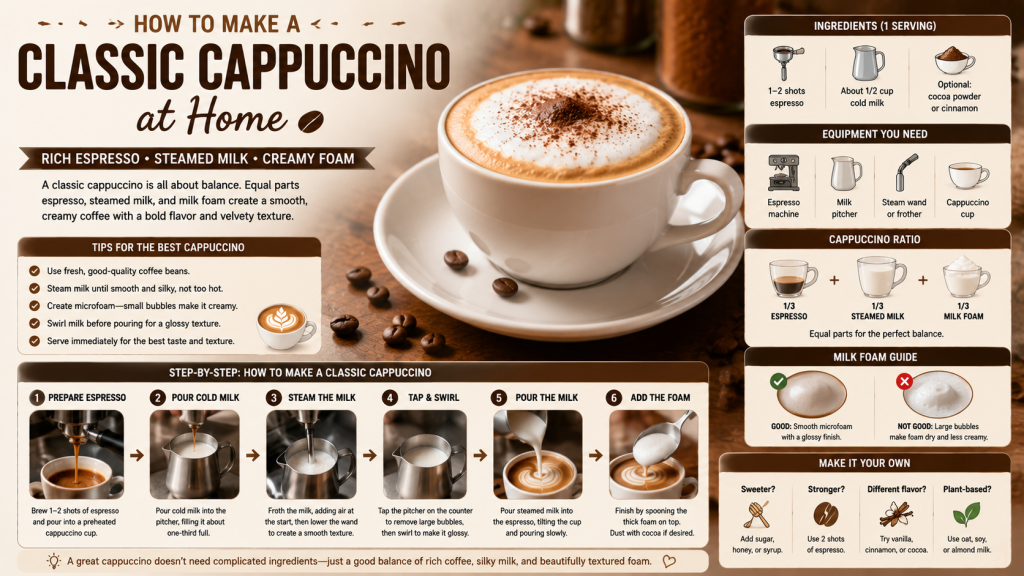
A classic cappuccino is one of the simplest and most satisfying coffee drinks to make at home. With rich espresso, smooth steamed milk, and a layer of creamy milk foam, you can enjoy a café-style cappuccino without needing complicated ingredients.
The key is getting the balance between espresso, steamed milk, and foam right. Once you understand the basic technique, making a delicious cappuccino becomes much easier.
What Is a Classic Cappuccino?
A traditional cappuccino is an espresso-based drink made with three main components:
- Espresso
- Steamed milk
- Milk foam
The ingredients are usually combined in roughly equal proportions, creating a drink that is stronger and more concentrated than a latte but creamier than a straight espresso.
A classic cappuccino typically has a rich coffee flavor, velvety milk texture, and thick layer of foam on top.
Ingredients You Need
For one classic cappuccino, you’ll need:
- 1–2 shots of espresso
- About ½ cup cold milk
- Optional cocoa powder or cinnamon for topping
Whole milk is a traditional choice because it produces smooth, creamy foam. However, oat milk and other milk alternatives can also work well if they are designed to foam.
For the best flavor, use freshly ground coffee if possible.
What Equipment Do You Need?
You don’t need a professional café setup, but a few tools can make the process easier.
Useful equipment includes:
- Espresso machine
- Coffee grinder
- Milk pitcher
- Milk frother or steam wand
- Cappuccino cup
If you don’t have an espresso machine, you can still make a cappuccino-inspired drink using strongly brewed coffee or moka pot coffee.
However, espresso provides the concentrated flavor and crema associated with a traditional cappuccino.
Step 1: Prepare the Espresso
Start by grinding your coffee beans finely enough for espresso.
Prepare one or two shots of espresso and pour them into a preheated cappuccino cup.
Freshly ground coffee usually provides a more aromatic and flavorful result.
If you prefer a stronger cappuccino, use two espresso shots.
Step 2: Prepare the Milk
Pour cold milk into a stainless-steel milk pitcher.
Don’t fill the pitcher completely because the milk will expand as you steam it.
A good starting point is to fill the pitcher to roughly one-third full.
Cold milk gives you more time to create a smooth texture while steaming.
Step 3: Steam and Froth the Milk
Place the steam wand just below the surface of the milk.
Turn on the steam and introduce a small amount of air into the milk. You should hear a gentle hissing sound rather than a loud screeching noise.
Once you’ve incorporated enough air, lower the pitcher slightly so the milk begins to swirl.
This creates a smooth, velvety texture and helps break up larger bubbles.
Continue steaming until the milk is hot and creamy, but avoid overheating it.
The ideal texture should resemble wet paint or melted ice cream rather than dry, stiff foam.
Step 4: Tap and Swirl the Milk
After steaming, gently tap the pitcher against the counter to remove large bubbles.
Then swirl the milk.
This helps create a glossy, smooth texture that is easier to pour.
The foam should look shiny and integrated with the steamed milk instead of separating into two completely different layers.
Step 5: Pour the Milk
Hold the espresso cup at a slight angle and slowly pour the steamed milk into the espresso.
Start with a steady, relatively low pour to combine the milk with the coffee.
As the cup fills, raise the pitcher slightly and pour more quickly to allow the foam to move toward the surface.
Finish with a thick layer of creamy foam.
If you’re interested in latte art, this is also the stage where you can experiment with simple patterns.
Classic Cappuccino Recipe at a Glance
Prep time: 5 minutes
Servings: 1
Ingredients
- 1–2 shots espresso
- About ½ cup cold milk
- Optional cocoa powder or cinnamon
Instructions
- Brew one or two shots of espresso.
- Pour the espresso into a warm cup.
- Steam cold milk until smooth and creamy.
- Create a thick but silky layer of foam.
- Gently tap and swirl the milk pitcher.
- Pour the steamed milk over the espresso.
- Finish with milk foam.
- Add cocoa or cinnamon if desired.
Serve immediately.
How Much Milk Should You Use?
The amount of milk depends on the size of your cup and how strong you want your cappuccino.
For a small traditional-style cappuccino, around 4–6 ounces of total drink is a useful starting point.
The goal isn’t simply to add as much milk as possible.
A cappuccino should maintain a noticeable espresso flavor while still having a creamy texture.
If your drink tastes mostly like milk, try using less milk or adding another espresso shot.
How to Get Thick, Creamy Foam
The foam is one of the defining characteristics of a cappuccino.
To create better foam, remember these tips:
Start With Cold Milk
Cold milk gives you more time to incorporate air and develop the texture.
Don’t Over-Aerate
Too much air creates large, dry bubbles.
You want fine microfoam rather than stiff foam that looks like shaving cream.
Keep the Milk Moving
Once enough air has been incorporated, create a gentle whirlpool with the steam wand.
This helps produce smoother foam.
Don’t Overheat the Milk
Very hot milk can taste unpleasant and may produce less desirable foam.
Stop steaming when the milk is hot and silky.
Can You Make a Cappuccino Without an Espresso Machine?
Yes.
While an espresso machine is ideal for a traditional cappuccino, you can make a homemade version using other brewing methods.
Moka Pot
A moka pot produces concentrated coffee that works well with steamed milk.
It won’t be exactly the same as espresso, but it can create a strong and flavorful base.
Strong Brewed Coffee
You can also use strongly brewed coffee.
Use a smaller amount of water and a little more coffee than usual to create a concentrated base.
Instant Espresso
Instant espresso powder is another convenient option if you don’t have brewing equipment.
Dissolve it in a small amount of hot water and use it as the coffee base.
How to Froth Milk Without a Steam Wand
You don’t need an espresso machine to create foamy milk.
Handheld Milk Frother
A handheld frother is one of the easiest alternatives.
Heat the milk gently, then froth it until it becomes light and creamy.
French Press
Pour warm milk into a clean French press and rapidly move the plunger up and down.
This can create a surprisingly good foam.
Don’t fill the French press too much because the milk will expand as you froth it.
Whisk
A regular whisk can also create foam.
Heat the milk gently and whisk vigorously until you achieve your desired texture.
The foam may not be as fine as professionally steamed microfoam, but it can still make a satisfying homemade cappuccino.
Whole Milk vs. Plant-Based Milk
The type of milk you use can change the texture and flavor of your cappuccino.
Whole milk provides a rich and creamy texture and is an excellent choice for traditional cappuccinos.
Oat milk can produce creamy foam and has a naturally sweet flavor that pairs nicely with espresso.
Soy milk can also create good foam and has a relatively neutral flavor.
Almond milk tends to produce a lighter drink with a subtle nutty taste.
For the easiest results, choose a plant-based milk specifically labeled as suitable for coffee or barista use.
Common Cappuccino Mistakes
Even a simple cappuccino can go wrong if a few details are overlooked.
Using Weak Coffee
If your coffee is too weak, the milk can completely overpower its flavor.
Use concentrated coffee or espresso.
Making Dry Foam
Very stiff, dry foam doesn’t blend well with the espresso.
Aim for silky microfoam with small bubbles.
Overheating the Milk
Extremely hot milk can affect both flavor and texture.
Heat it gently and avoid boiling.
Adding Too Much Milk
A cappuccino shouldn’t taste like a large glass of warm milk.
Keep the coffee flavor noticeable.
Pouring Without Swirling
If the milk separates before you pour it, the liquid and foam won’t combine properly.
Always swirl the milk pitcher before pouring.
How to Make a Stronger Cappuccino
If you enjoy bold coffee, use two espresso shots.
You can also choose a coffee blend with rich chocolate, nutty, or caramel notes.
Medium-dark roasted coffee often works particularly well if you want a traditional, rich-tasting cappuccino.
However, lighter roasts can also produce excellent cappuccinos with brighter and more complex flavors.
How to Make a Sweeter Cappuccino
A classic cappuccino doesn’t require sugar, but you can certainly sweeten it to your preference.
Try adding:
- Sugar
- Honey
- Vanilla syrup
- Caramel syrup
- Cinnamon
For the best coffee flavor, start with a small amount of sweetener.
Milk naturally contains some sweetness, especially when properly steamed, so you may find that you need less sugar than expected.
Cappuccino vs. Latte
Cappuccinos and lattes both use espresso and milk, but their textures and proportions are different.
A cappuccino generally has a stronger coffee presence and a thicker layer of foam.
A latte typically contains more steamed milk and a thinner layer of microfoam, resulting in a larger and creamier drink.
If you prefer a stronger espresso flavor and more foam, a cappuccino may be the better choice.
If you prefer a smoother, milkier drink, try a latte.
How to Serve a Cappuccino
A cappuccino is best served immediately after preparation.
The contrast between hot espresso, silky milk, and fresh foam is most enjoyable when the drink is freshly made.
You can serve it with:
- A small pastry
- Biscotti
- Croissant
- Toast
- Dark chocolate
For a simple finishing touch, add a light dusting of cocoa powder or cinnamon.
Final Thoughts
Making a classic cappuccino at home is easier than it may seem.
The recipe only requires espresso, milk, and good foam, but technique makes a significant difference.
Start with freshly brewed espresso, use cold milk, create smooth microfoam, and avoid overheating the milk. If you don’t have an espresso machine, a moka pot and handheld milk frother can still help you create a delicious cappuccino-inspired drink.
Once you’ve mastered the basic technique, you can experiment with different coffee beans, milk types, and flavors to create a cappuccino that suits your taste.