For many people, coffee is part of a daily routine. A cup in the morning can feel like the perfect way to start the day, and some people drink several cups throughout the day to stay focused and alert.
But what happens if you suddenly stop drinking coffee?
If you’ve been consuming caffeine regularly, quitting abruptly can cause caffeine withdrawal symptoms. These symptoms are usually temporary, but they can be uncomfortable, especially during the first few days.
From headaches and tiredness to changes in mood and concentration, here’s what you can expect when you suddenly stop drinking coffee.
Why Does Your Body React When You Stop Caffeine?
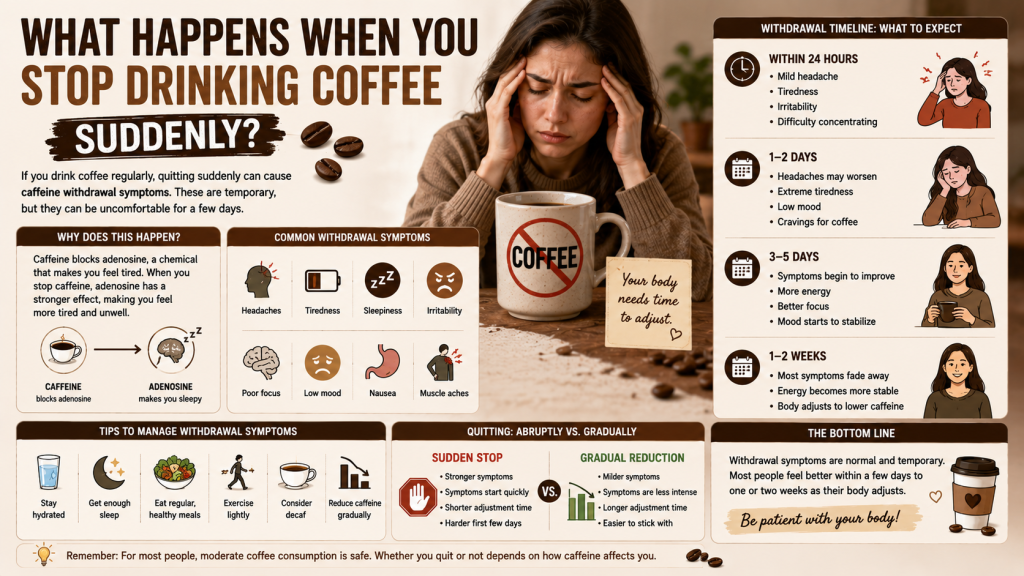
Caffeine affects the brain by blocking the action of adenosine, a chemical involved in sleep pressure and feelings of tiredness.
When you consume caffeine regularly, your body adapts to its presence. When you suddenly remove caffeine, that adaptation doesn’t disappear immediately.
As caffeine leaves your system, adenosine can have a stronger effect than you’re used to. This can make you feel unusually tired, sluggish, or less alert.
Your body gradually adjusts again, but the process can take several days.
Common Symptoms of Caffeine Withdrawal
Not everyone experiences withdrawal symptoms, and the severity can vary from person to person.
Common symptoms include:
- Headaches
- Tiredness
- Sleepiness
- Difficulty concentrating
- Irritability
- Low mood
- Reduced alertness
- Nausea
- Muscle aches
- A general feeling of being unwell
The more caffeine you regularly consume, the more noticeable withdrawal may be.
Someone who drinks one small cup of coffee a day may experience little discomfort, while someone who drinks several strong coffees every day may notice a much bigger difference.
Headaches Are One of the Most Common Symptoms
One of the most recognizable signs of caffeine withdrawal is a headache.
Caffeine can affect blood vessels in the brain. When regular caffeine consumption suddenly stops, changes in blood flow can contribute to withdrawal headaches.
The headache may feel dull, throbbing, or persistent.
For some people, it can be one of the most uncomfortable parts of quitting coffee.
Fortunately, caffeine withdrawal headaches are generally temporary.
You May Feel Extremely Tired
Coffee doesn’t actually create energy in the same way that food and sleep do.
Instead, caffeine temporarily reduces your perception of tiredness.
When you stop drinking coffee, that stimulating effect disappears.
As a result, you may suddenly notice how tired you were without caffeine.
You might feel:
- Sleepier in the morning
- Less motivated
- Slower during the day
- More likely to want an afternoon nap
This can be frustrating, but it’s a normal part of adjusting to less caffeine.
Your Concentration May Drop Temporarily
Many people use coffee to help them focus while working or studying.
When caffeine is suddenly removed, concentration can become more difficult for a short period.
You might find yourself rereading things, losing focus more easily, or feeling mentally slower than usual.
This doesn’t necessarily mean your ability to concentrate has permanently changed.
As your body adjusts to lower caffeine intake, your normal alertness can gradually return.
Your Mood May Change
Caffeine withdrawal can affect your mood as well as your physical energy.
Some people become more:
- Irritable
- Frustrated
- Moody
- Unmotivated
- Sleepy
If you’re accustomed to using coffee as part of your morning routine, suddenly removing both the caffeine and the ritual can make the transition feel even more noticeable.
Fortunately, these changes are usually temporary.
What Happens During the First 24 Hours?
Withdrawal symptoms can begin within hours after your last caffeine intake, particularly if you’re accustomed to consuming caffeine regularly.
During the first day, you may notice:
- Mild tiredness
- Difficulty concentrating
- Headache
- Sleepiness
- Irritability
Some people notice symptoms fairly quickly, while others may not feel much different until the following day.
The timing depends on your usual caffeine intake and individual sensitivity.
What Happens After 1–2 Days?
For many people, the second day can be one of the more noticeable stages of caffeine withdrawal.
Headaches and tiredness may become stronger.
You may also feel less motivated or find it harder to focus on tasks.
This is often the point when people are tempted to return to their usual coffee routine.
If your goal is to reduce caffeine, remember that withdrawal symptoms are temporary.
What Happens After Several Days?
Withdrawal symptoms generally begin to improve as your body adjusts.
You may notice that:
- Headaches become less frequent
- Energy levels begin to stabilize
- Concentration improves
- Mood returns to normal
- Sleepiness becomes less intense
The exact timeline varies from person to person.
Some people feel significantly better after several days, while others may take longer to feel completely normal.
Can Stopping Coffee Improve Your Sleep?
It can, particularly if you were consuming caffeine later in the day.
Caffeine can remain active in the body for several hours. Drinking coffee in the afternoon or evening may make it harder for some people to fall asleep or may affect sleep quality.
If caffeine was interfering with your sleep, reducing or eliminating it may eventually help you sleep more naturally.
However, the improvement may not be immediate.
During the first few days without caffeine, you may actually feel more sleepy because you’re experiencing withdrawal.
Once the withdrawal period passes, you may have a clearer picture of how caffeine was affecting your sleep.
Can You Have More Natural Energy Without Coffee?
Some people report feeling more naturally alert after adjusting to life without caffeine.
Instead of relying on caffeine to temporarily suppress tiredness, your energy levels may become more consistent throughout the day.
However, this doesn’t mean you’ll suddenly have unlimited energy.
Sleep, nutrition, physical activity, hydration, stress, and overall health still play important roles in how energetic you feel.
Removing coffee isn’t a replacement for healthy sleep habits.
Does Quitting Coffee Help With Anxiety?
Caffeine can make some people feel nervous, restless, or jittery, especially at higher doses.
If you’re sensitive to caffeine, reducing your intake may help decrease these sensations.
Some people notice that they feel calmer or less restless after reducing caffeine.
However, everyone’s response is different, and coffee isn’t necessarily the cause of anxiety or stress.
If you’re experiencing persistent or severe anxiety, it’s important not to assume that caffeine is the only explanation.
What About Digestion?
Coffee can stimulate the digestive system, which is one reason some people feel the urge to use the bathroom shortly after drinking it.
If you suddenly stop drinking coffee, your digestion and bowel habits may temporarily change.
Some people notice less frequent bowel movements, while others may not notice any difference.
These changes are usually related to the removal of a familiar routine and coffee’s effects on the digestive system.
Why Do You Crave Coffee After Quitting?
Coffee cravings aren’t necessarily about the taste.
Caffeine can create physical dependence when consumed regularly, meaning your body becomes accustomed to having it.
There’s also a strong behavioral component.
If you always drink coffee:
- After waking up
- During a work break
- After lunch
- While studying
- During social occasions
then those situations can trigger the desire for coffee even after you’ve stopped drinking it.
Replacing the routine with another beverage can make the transition easier.
Should You Quit Coffee Suddenly or Gradually?
If you drink a large amount of caffeine every day, gradually reducing your intake may be more comfortable than stopping abruptly.
For example, you could:
- Reduce the number of cups you drink each day.
- Make each cup slightly weaker.
- Replace one regular coffee with decaf.
- Reduce the size of your servings.
- Eventually transition to mostly or completely decaf.
A gradual reduction gives your body more time to adjust and may make withdrawal symptoms less noticeable.
How to Reduce Caffeine Withdrawal Symptoms
If you decide to stop coffee, several simple strategies may make the process easier.
Stay Hydrated
Drink water regularly throughout the day.
Although coffee contributes to fluid intake, replacing the beverage with water can help maintain a healthy hydration routine.
Get Enough Sleep
If you’re already tired from caffeine withdrawal, adequate sleep becomes especially important.
Try to maintain a consistent sleep schedule.
Eat Regular Meals
Balanced meals can help provide steady energy while you’re adjusting to less caffeine.
Exercise
Light physical activity, such as walking, can help you feel more alert when you’re experiencing temporary fatigue.
Consider Decaf
Decaf can help preserve the ritual of drinking coffee while dramatically reducing your caffeine intake.
Reduce Gradually
If withdrawal is particularly uncomfortable, tapering your caffeine consumption may be easier than stopping all at once.
Is Decaf Completely Caffeine-Free?
Not quite.
Decaf coffee still contains a small amount of caffeine, although much less than regular coffee.
If your goal is simply to reduce caffeine, decaf can be a useful alternative.
If you want to avoid caffeine completely, you’ll need to consider other naturally caffeine-free beverages as well.
What Happens to Your Coffee Routine?
Quitting coffee isn’t only about caffeine.
For many people, coffee is a daily ritual.
You may miss:
- The smell of freshly brewed coffee
- Holding a warm mug in the morning
- Taking a coffee break at work
- Meeting friends for coffee
- The taste of your favorite roast
Replacing the ritual can make quitting easier.
Try herbal tea, warm milk, decaf coffee, or simply a glass of water as a new morning routine.
Is It Better to Quit Coffee Completely?
Not necessarily.
For most healthy adults, moderate caffeine consumption can be part of a normal diet.
Whether you should quit depends on your personal preferences and how caffeine affects you.
You might consider reducing caffeine if you notice that coffee:
- Interferes with your sleep
- Makes you feel jittery
- Causes discomfort
- Makes you dependent on it to feel alert
- Leads you to consume more caffeine than you intended
On the other hand, if you enjoy coffee and it doesn’t cause problems for you, there’s not necessarily a reason to eliminate it completely.
The Bottom Line
So, what happens when you suddenly stop drinking coffee?
If you’ve been consuming caffeine regularly, you may experience headaches, tiredness, sleepiness, difficulty concentrating, and irritability. These symptoms are usually temporary as your body adjusts to the absence of caffeine.
The first few days can be the most challenging, but symptoms generally improve as your body adapts.
If you want to quit coffee but are concerned about withdrawal, gradually reducing your caffeine intake can make the process more comfortable.
And remember, quitting coffee doesn’t mean giving up the coffee ritual. You can switch to decaf or another favorite drink while keeping the relaxing routine you enjoy.