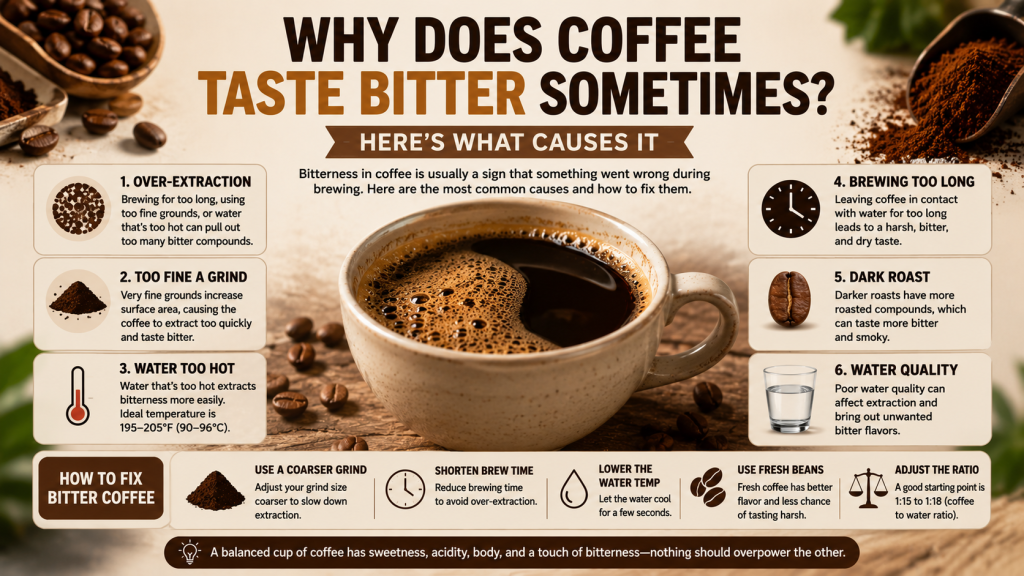
Have you ever brewed a cup of coffee expecting a smooth, rich flavor, only to take a sip and find it surprisingly bitter? While some bitterness is a natural part of coffee, an overly bitter cup can be a sign that something went wrong during brewing.
The good news is that bitter coffee is usually easy to fix. From using water that is too hot to grinding your beans too finely, several factors can affect the final taste.
In this article, we’ll explore why coffee sometimes tastes bitter and what you can do to make every cup smoother and more balanced.
Is Coffee Supposed to Taste Bitter?
A small amount of bitterness is completely normal in coffee. Coffee beans naturally contain compounds that contribute to bitterness, and roasting also creates bitter-tasting compounds.
However, good coffee should generally have a balance between bitterness, acidity, sweetness, aroma, and body.
If your coffee tastes extremely bitter, harsh, dry, or burnt, the problem may be related to the beans, roasting, brewing method, or water.
1. You Are Over-Extracting the Coffee
One of the most common reasons coffee tastes bitter is over-extraction.
During brewing, water pulls soluble compounds from the coffee grounds. Ideally, you want to extract enough compounds to create a balanced flavor.
If water extracts too much from the grounds, it can bring out unpleasant bitter and astringent flavors.
Several things can cause over-extraction, including:
- Brewing for too long
- Using coffee grounds that are too fine
- Using too much water
- Brewing at an excessively high temperature
If your coffee tastes bitter and dry rather than simply strong, over-extraction is a likely cause.
2. Your Coffee Grounds Are Too Fine
Grind size has a major effect on coffee extraction.
When coffee is ground too finely, the water has more surface area to interact with. This can cause the coffee to extract too quickly and potentially become bitter.
For example, if you’re making a French press, a coarse grind is generally more appropriate. For pour-over coffee, a medium grind is often a better starting point.
The correct grind size depends on your brewing method, so adjusting it can make a significant difference.
3. Your Water Is Too Hot
Water temperature can also affect the flavor of your coffee.
If the water is excessively hot, it can extract compounds too quickly and contribute to an overly bitter cup.
For many manual brewing methods, water around 195–205°F (90–96°C) is a useful starting range.
You do not necessarily need to measure the temperature every time. If you’re boiling water in a kettle, letting it sit briefly before brewing can help bring the temperature down.
4. You Brewed the Coffee for Too Long
Brewing time matters because coffee continues extracting as long as water remains in contact with the grounds.
If you leave coffee grounds in contact with water for too long, the resulting drink can become harsh and bitter.
This is particularly important for methods such as French press and cold brew, where coffee is in contact with water for an extended period.
If your coffee is consistently bitter, try shortening the brewing time slightly and see whether the flavor becomes more balanced.
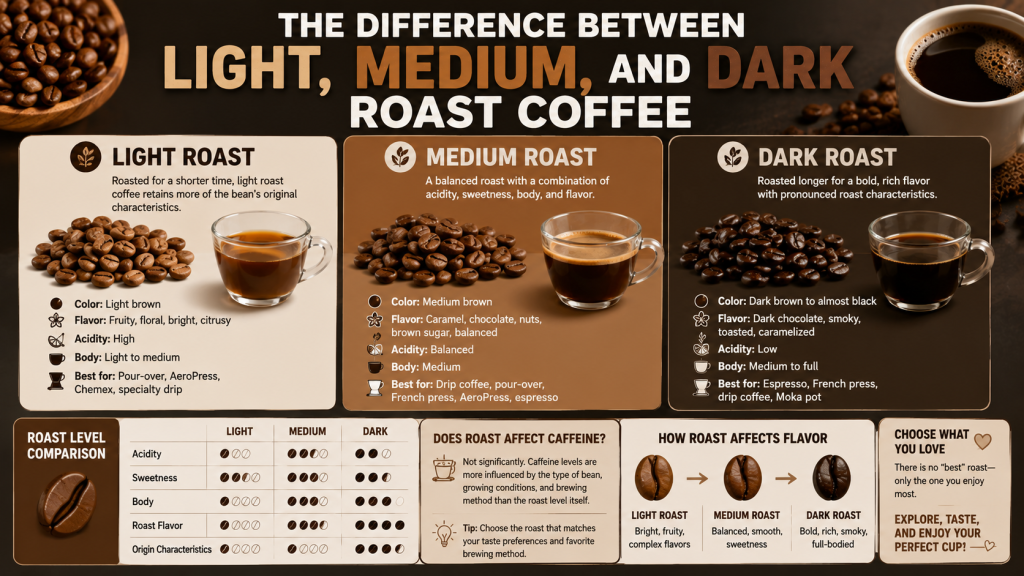
5. Your Coffee Beans Are Too Darkly Roasted
The roast level can have a significant impact on bitterness.
Dark-roasted coffee typically develops deeper flavors such as dark chocolate, caramelized sugar, smoke, and roasted notes. Depending on the roast, it can also taste more bitter.
This doesn’t mean dark roast coffee is bad. Many people enjoy its bold and intense character.
However, if you prefer smoother and sweeter coffee, try a light or medium roast.
Lighter roasts often highlight fruity, floral, citrus, or sweet flavors, while medium roasts can provide a balance between acidity, sweetness, and roast character.
6. Your Coffee Beans Are Stale
Freshness also plays an important role in coffee flavor.
As roasted coffee ages, it gradually loses aromatic compounds. Stale coffee can taste flat, dull, harsh, or unpleasant.
For the best results, buy coffee in reasonably sized quantities and store it in an airtight container away from heat, moisture, light, and strong odors.
Grinding your beans immediately before brewing can also help preserve their aroma and flavor.
7. Your Coffee-to-Water Ratio Is Off
Using too much coffee does not always mean you will get better or stronger-tasting coffee.
If the coffee-to-water ratio is not balanced, your cup can taste excessively intense or unpleasant.
A useful starting point for many brewing methods is around 1 gram of coffee for every 15–18 grams of water.
For example, you might start with:
20 grams of coffee + 300–360 grams of water
From there, adjust the ratio according to your taste.
If the coffee tastes too strong, use slightly more water. If it tastes weak, use slightly more coffee or adjust the brewing process.
8. Your Coffee Maker Needs to Be Cleaned
Sometimes the problem isn’t the coffee at all—it’s the equipment.
Coffee oils and residue can accumulate inside coffee makers, grinders, French presses, and other brewing equipment. Over time, these residues can create unpleasant flavors.
Clean your coffee equipment regularly according to the manufacturer’s recommendations.
Pay particular attention to parts that come into direct contact with coffee and water.
A clean brewing setup can make a surprisingly noticeable difference.
9. Your Water Quality May Be the Problem
Coffee is mostly water, so the quality of your water matters.
Water with an unusual taste or odor can affect the final cup. Extremely hard or very soft water can also influence extraction and flavor.
If your tap water doesn’t taste good on its own, consider using filtered water for brewing.
You don’t necessarily need expensive bottled water. A good-quality water filter can be enough to improve the flavor of your coffee.
How to Fix Bitter Coffee
If your coffee tastes too bitter, don’t immediately throw it away. Try making one adjustment at a time.
Make the Grind Coarser
If you’re using a very fine grind, make it slightly coarser. This can slow down extraction and help reduce bitterness.
Reduce the Brewing Time
If your brewing method allows you to control the time, shorten it slightly.
Lower the Water Temperature
If you suspect your water is too hot, allow it to cool for a short time before brewing.
Use a Lighter Roast
If you naturally prefer smoother and sweeter coffee, experiment with medium or light-roasted beans.
Use Fresh Coffee
Freshly roasted and freshly ground coffee generally offers more aroma and complexity than stale beans.
Adjust the Coffee-to-Water Ratio
Try adding slightly more water if the coffee tastes too intense, or slightly more coffee if the cup is weak.
What Does Balanced Coffee Taste Like?
A balanced cup of coffee should not necessarily taste completely free of bitterness.
Instead, bitterness should work together with other flavors.
Depending on the beans and brewing method, you might notice:
- Natural sweetness
- Pleasant acidity
- Chocolate or caramel notes
- Fruity or floral aromas
- A smooth mouthfeel
- A clean finish
The goal is not to eliminate bitterness completely but to prevent it from overwhelming the other characteristics of the coffee.
A Simple Way to Troubleshoot Bitter Coffee
The next time your coffee tastes bitter, check these factors:
Too bitter? Try a coarser grind.
Bitter and dry? Reduce extraction by shortening the brewing time or adjusting the grind.
Burnt or smoky? Try a lighter roast.
Flat and unpleasant? Check the freshness of your beans.
Bitter despite changing the recipe? Clean your equipment and check your water quality.
Making only one change at a time is the best way to understand what is affecting your coffee.
Final Thoughts
Bitter coffee is usually not caused by one single problem. It can result from over-extraction, an unsuitable grind size, high water temperature, excessive brewing time, dark roasting, stale beans, poor water quality, or dirty equipment.
The key is to think about balance. Good coffee should have a combination of sweetness, acidity, bitterness, aroma, and body rather than one flavor dominating the entire cup.
Start by making small adjustments to your grind size, brewing time, and water temperature. Once you find the right combination, you can turn a harsh cup of coffee into a smoother and more enjoyable brew.