When you buy coffee beans, one of the first things you’ll notice is the roast level. Coffee is commonly described as light roast, medium roast, or dark roast, and each level can produce a very different flavor.
But what actually changes when coffee is roasted for longer? Does dark roast really contain more caffeine? And which roast is best for your favorite brewing method?
Understanding the differences between light, medium, and dark roast coffee can make it much easier to choose beans that match your taste.
What Is Coffee Roasting?
Coffee beans start as green seeds inside coffee cherries. Before they become the aromatic brown beans used for brewing, they need to be roasted.
During roasting, the beans are exposed to heat, which causes physical and chemical changes. Their color becomes darker, moisture decreases, and new flavors and aromas develop.
The length and temperature of the roasting process influence the final characteristics of the coffee.
In simple terms:
- Light roast: Shorter roasting time and lighter color
- Medium roast: Moderate roasting time and balanced flavor
- Dark roast: Longer roasting time and darker color
However, roast level is only one factor affecting coffee flavor. Origin, variety, processing method, freshness, grind size, and brewing technique also play important roles.
What Is Light Roast Coffee?
Light roast coffee is roasted for a shorter period than medium and dark roasts. The beans usually have a light brown color and little or no visible oil on the surface.
Because the beans spend less time under high heat, more of their original characteristics can remain noticeable.
Flavor Profile
Light roast coffee is often associated with:
- Fruity flavors
- Floral aromas
- Citrus or berry notes
- Bright acidity
- Tea-like characteristics
- Complex aromas
Some light roasts can taste surprisingly sweet and delicate, while others can have a pronounced acidity.
If you enjoy coffee that tastes vibrant and distinctive rather than heavily roasted, light roast may be a good choice.
Best Brewing Methods
Light roast coffee is popular for brewing methods that highlight flavor clarity, such as:
- Pour-over
- AeroPress
- Chemex
- Specialty drip coffee
Because light roasts can be relatively dense and may require careful extraction, adjusting the grind size, water temperature, and brewing time can help bring out their best characteristics.
What Is Medium Roast Coffee?
Medium roast coffee sits between light and dark roast.
The beans typically have a medium brown color and may have a balanced combination of acidity, sweetness, body, and roast character.
For many coffee drinkers, medium roast is a comfortable middle ground.
Flavor Profile
Medium roast coffee can offer flavors such as:
- Caramel
- Chocolate
- Nuts
- Brown sugar
- Fruit
- Balanced acidity
Compared with light roast, medium roast generally has more noticeable roast flavors and body. Compared with dark roast, it usually retains more of the bean’s original characteristics.
This versatility makes medium roast a popular choice for everyday coffee.
Best Brewing Methods
Medium roast works well with many brewing methods, including:
- Drip coffee makers
- Pour-over
- French press
- AeroPress
- Espresso
- Moka pot
If you’re not sure which roast to try, medium roast can be a good starting point.
What Is Dark Roast Coffee?
Dark roast coffee is roasted for a longer period, resulting in dark brown beans that may have a shiny or oily surface.
The longer roasting process reduces some of the original characteristics of the coffee and emphasizes flavors created during roasting.
Flavor Profile
Dark roast coffee is commonly associated with:
- Dark chocolate
- Toasted nuts
- Caramelized flavors
- Smoky notes
- Roasted flavors
- Lower perceived acidity
- Fuller body
Dark roast is often preferred by people who enjoy bold, intense coffee with a strong roasted character.
However, dark roast does not necessarily mean the coffee is stronger in every sense. A coffee can taste bold because of its roast profile without necessarily containing more caffeine.
Light vs. Medium vs. Dark Roast
The easiest way to compare the three roast levels is to look at their general characteristics.
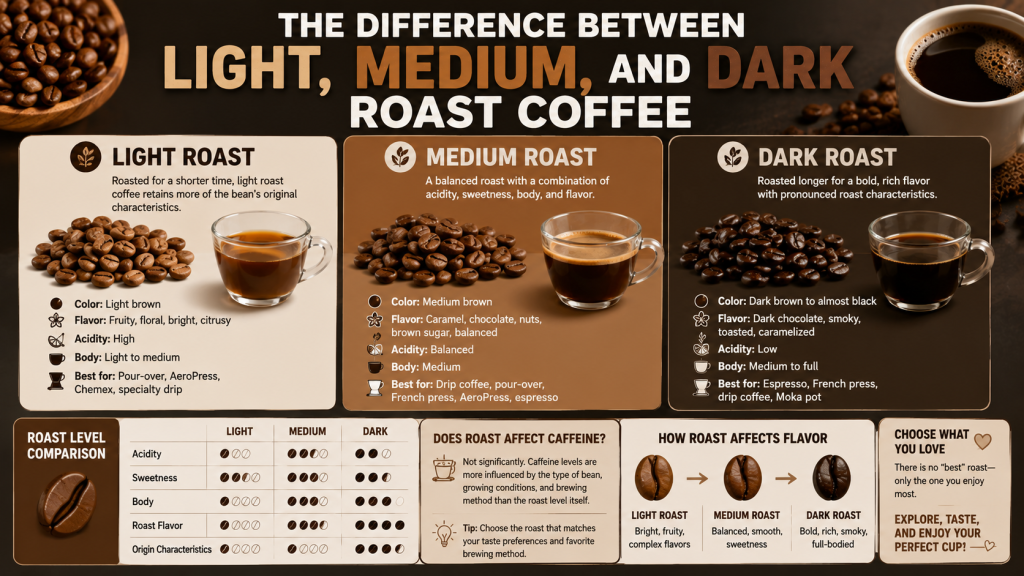
| Characteristic | Light Roast | Medium Roast | Dark Roast |
|---|---|---|---|
| Color | Light brown | Medium brown | Dark brown |
| Acidity | Usually higher | Balanced | Usually lower |
| Body | Light to medium | Medium | Medium to full |
| Flavor | Fruity, floral, bright | Balanced, sweet, nutty | Rich, smoky, chocolatey |
| Roast flavor | Subtle | Moderate | Strong |
| Origin characteristics | More noticeable | Balanced | Less noticeable |
| Common use | Pour-over, specialty brewing | Versatile | Espresso, French press, drip |
These are general characteristics, and individual coffees can vary significantly.
Which Roast Has More Caffeine?
One of the most common coffee myths is that dark roast coffee contains much more caffeine than light roast coffee.
The reality is more complicated.
Roasting does not simply determine the caffeine content of coffee. The amount of caffeine in your cup also depends on factors such as the coffee variety, serving size, grind, and brewing method.
If you measure coffee by weight, light and dark roasts can have relatively similar caffeine levels because caffeine is fairly stable during roasting.
If you measure coffee by volume, such as using scoops, the difference can be more noticeable because dark-roasted beans are less dense. A scoop of light-roasted beans can contain more mass than the same volume of dark-roasted beans.
So, don’t choose a roast solely because you believe it will provide dramatically more caffeine.
Does Dark Roast Have Less Acidity?
Generally, dark roasting tends to reduce some of the acidity associated with the original coffee.
This is one reason dark roast can taste smoother or less bright than a light roast.
However, acidity isn’t necessarily a bad thing. In specialty coffee, pleasant acidity can provide freshness and complexity.
Light roasts may have citrus-like acidity, while medium roasts can have a more balanced acidity. Dark roasts tend to emphasize roast flavors and reduce the perception of brightness.
Which Roast Tastes Stronger?
This depends on what you mean by “strong.”
If you mean stronger roasted flavor, dark roast usually tastes stronger.
If you mean more caffeine, roast level alone does not provide a simple answer.
If you mean more intense coffee flavor, the brewing method and coffee-to-water ratio also matter.
For example, a properly brewed light roast can taste extremely intense and flavorful even though it has a completely different flavor profile from a dark roast.
Which Roast Is Best for Espresso?
All three roast levels can be used for espresso.
However, medium and dark roasts have traditionally been popular for espresso because they can produce rich body, chocolate-like flavors, and a more familiar traditional espresso profile.
Light-roasted espresso has also become increasingly popular in specialty coffee. It can highlight fruity, floral, and acidic characteristics that are less noticeable in traditional darker espresso roasts.
If you like traditional, rich espresso, try medium or dark roast. If you enjoy experimenting with complex flavors, a light roast can be worth exploring.
How Roast Level Affects Brewing
Different roast levels can respond differently during brewing.
Light-roasted beans tend to be denser and can sometimes require more careful extraction. You may need to experiment with a finer grind, higher water temperature, or longer brewing time depending on the coffee.
Medium roasts are generally versatile and can work well across a wide range of brewing methods.
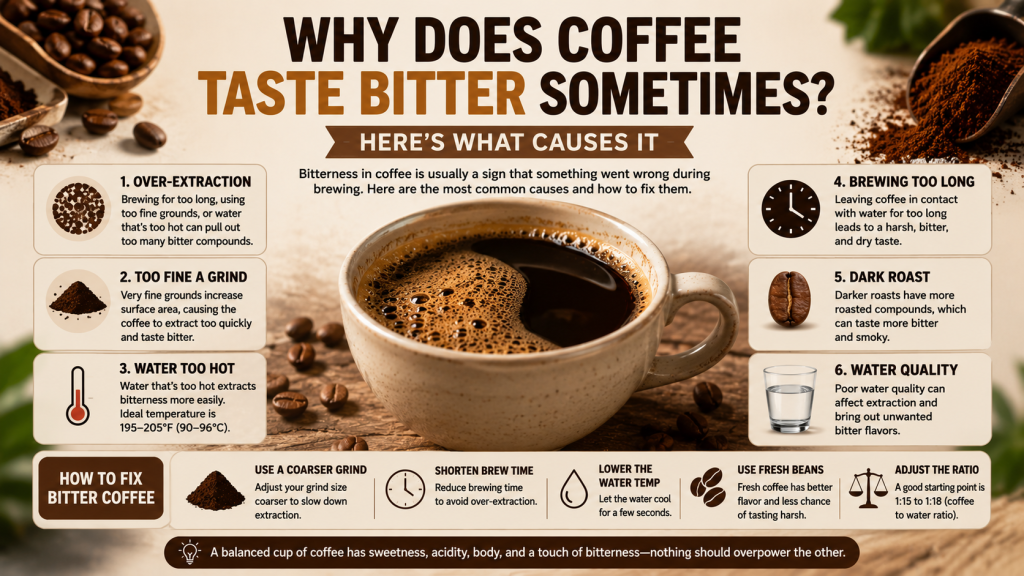
Dark roasts can extract relatively easily and may become harsh or bitter if they are over-extracted.
The best approach is to start with the roaster’s brewing recommendations and adjust gradually based on taste.
Which Roast Is Best for Beginners?
If you’re new to coffee, medium roast is often an easy place to start.
It typically offers a balance between the natural characteristics of the beans and the flavors created during roasting.
Once you understand what you like, you can explore lighter or darker roasts.
Try a light roast if you want:
- Fruity and floral flavors
- Higher perceived acidity
- More distinctive origin characteristics
Try a medium roast if you want:
- Balanced sweetness and acidity
- Chocolate and nutty flavors
- A versatile everyday coffee
Try a dark roast if you want:
- Bold roasted flavors
- Lower perceived acidity
- Smoky or dark chocolate notes
- A heavier coffee experience
Does Roast Level Affect Freshness?
Yes, but roast level and freshness are separate concepts.
All roasted coffee gradually loses some of its aromatic compounds over time. Proper storage can slow this process.
Regardless of roast level, store your coffee in an airtight container away from excessive heat, light, moisture, and strong odors.
Grinding the beans shortly before brewing can also help preserve their aroma.
How to Choose the Right Roast for You
Choosing coffee doesn’t have to be complicated.
Think about the flavors you naturally enjoy.
If you like fruit, tea, citrus, and floral flavors, start with a light roast.
If you enjoy caramel, chocolate, nuts, and balanced sweetness, try a medium roast.
If you prefer dark chocolate, smoky, toasted, and bold flavors, a dark roast may be more suitable.
You can also buy the same coffee in different roast levels and compare them side by side. This can be a fun way to understand how roasting changes the flavor of coffee.
Final Thoughts
The difference between light, medium, and dark roast coffee comes primarily from how long and how intensely the beans are roasted.
Light roast tends to highlight the original characteristics of the coffee, offering bright acidity and fruity or floral flavors.
Medium roast provides a balance of sweetness, acidity, body, and roast character, making it a versatile choice for everyday brewing.
Dark roast emphasizes bold roasted flavors such as dark chocolate, toast, and smoke, with generally lower perceived acidity.
There is no universally “best” roast. The right choice depends on your personal taste and how you like to brew your coffee.