For coffee lovers who enjoy the flavor of coffee but want to reduce their caffeine intake, decaf coffee can be an appealing alternative. But what exactly is decaf coffee, and how does coffee become decaffeinated?
Contrary to popular belief, decaf coffee is not completely caffeine-free. Instead, most of the caffeine is removed from the coffee beans before they are roasted and brewed. Several different methods can be used to accomplish this, and each method can have a slightly different effect on flavor.
What Is Decaf Coffee?
Decaf, short for decaffeinated coffee, is coffee that has undergone a process to remove most of its naturally occurring caffeine.
Coffee beans naturally contain caffeine because the plant produces it as a natural defense mechanism. During decaffeination, green coffee beans are treated before roasting to extract most of that caffeine while preserving as much of the coffee’s original flavor and aroma as possible.
In many countries, coffee can be labeled “decaf” even though it still contains a small amount of caffeine. The exact amount varies depending on the beans, processing method, serving size, and brewing technique.
How Much Caffeine Is in Decaf Coffee?
Decaf coffee generally contains far less caffeine than regular coffee, but it is not necessarily caffeine-free.
A typical cup of regular brewed coffee may contain roughly 80–100 milligrams of caffeine, although the amount can vary considerably. A comparable cup of decaf usually contains only a small fraction of that amount.
The exact caffeine content depends on factors such as:
- The type of coffee bean
- The decaffeination method
- The amount of coffee used
- The brewing method
- The serving size
If you need to avoid caffeine completely, it’s important to remember that decaf may still contain trace amounts.
When Is Coffee Decaffeinated?
Decaffeination generally takes place before the coffee beans are roasted.
Green coffee beans are easier to process because they have not yet developed the roasted characteristics associated with brewed coffee. The beans are exposed to water, solvents, or other substances that help extract caffeine.
After the caffeine is removed, the beans are dried and processed normally before being roasted.
How Is Caffeine Removed From Coffee?
There are several major methods used to decaffeinate coffee. The most common approaches rely on water or chemical solvents to separate caffeine from the green coffee beans.
1. Swiss Water Process
The Swiss Water Process is a chemical-solvent-free method that uses water and filtration to remove caffeine.
Green coffee beans are soaked in water, allowing caffeine and other soluble compounds to move out of the beans. The water is then passed through specialized carbon filters that capture caffeine while allowing many flavor compounds to remain.
The resulting coffee is processed carefully to preserve its natural characteristics.
This method is popular among coffee drinkers who specifically look for coffee decaffeinated without traditional chemical solvents.
2. Carbon Dioxide Process
Another method uses carbon dioxide (CO₂) under controlled temperature and pressure.
Under specific conditions, CO₂ can act as a solvent that selectively extracts caffeine from green coffee beans. The process can remove caffeine efficiently while helping preserve many of the compounds responsible for coffee’s flavor.
CO₂ decaffeination is often used for commercial-scale coffee production.
3. Solvent-Based Processes
Some decaffeination methods use food-grade solvents to extract caffeine from coffee beans.
Two commonly used solvents are ethyl acetate and methylene chloride. The beans are exposed to the solvent, which binds with the caffeine and allows it to be removed.
Ethyl acetate is sometimes described as a more “natural” option because it can occur naturally in fruits and other foods. However, the term does not necessarily mean that the final coffee is better or healthier; the processing conditions and quality of the coffee are more important factors.
Modern commercial decaffeination processes are carefully controlled to keep solvent residues within applicable safety standards.
Does Decaf Coffee Taste Different?
It can.
Decaffeination removes caffeine, but the process can also affect some compounds associated with coffee’s aroma and flavor. As a result, some decaf coffees may taste slightly different from their caffeinated counterparts.
However, advances in decaffeination technology have significantly improved the quality of decaf coffee.
The flavor also depends heavily on the original beans, roast level, freshness, and brewing method. A high-quality decaf coffee can still have complex flavors, pleasant aromas, and a satisfying body.
Is Decaf Coffee Completely Caffeine-Free?
No. Decaf does not usually mean zero caffeine.
Small amounts of caffeine can remain after the decaffeination process. The amount is generally much lower than in regular coffee, but it can vary between products.
For most people who simply want to reduce their caffeine consumption, decaf can be a useful option. People who are highly sensitive to caffeine may want to check product information and serving sizes carefully.
Why Do People Choose Decaf Coffee?
People choose decaf for many different reasons.
Some want to enjoy coffee later in the day without consuming as much caffeine. Others may prefer the taste and ritual of coffee while limiting their overall caffeine intake.
Decaf can also be useful for people who find that regular coffee makes them feel too stimulated or interferes with their ability to relax.
Importantly, choosing decaf doesn’t mean giving up the coffee experience. You can still enjoy espresso, iced coffee, lattes, cappuccinos, and other coffee drinks using decaffeinated beans.
Is Decaf Coffee Healthy?
Decaf coffee contains many of the same naturally occurring compounds found in regular coffee, although the exact composition can vary depending on the beans and processing method.
For many people, decaf can be part of a balanced diet. However, the overall nutritional impact of a coffee drink also depends on what is added to it. Large amounts of sugar, flavored syrups, cream, or sweetened condensed milk can substantially change the nutritional profile.
As with regular coffee, moderation and individual tolerance are important considerations.
How to Choose a Good Decaf Coffee
If you’re looking for better-tasting decaf coffee, consider these factors:
Check the decaffeination method. Some coffee brands clearly identify whether they use the Swiss Water Process, CO₂, or another method.
Look for freshly roasted beans. Freshness can make a significant difference in flavor.
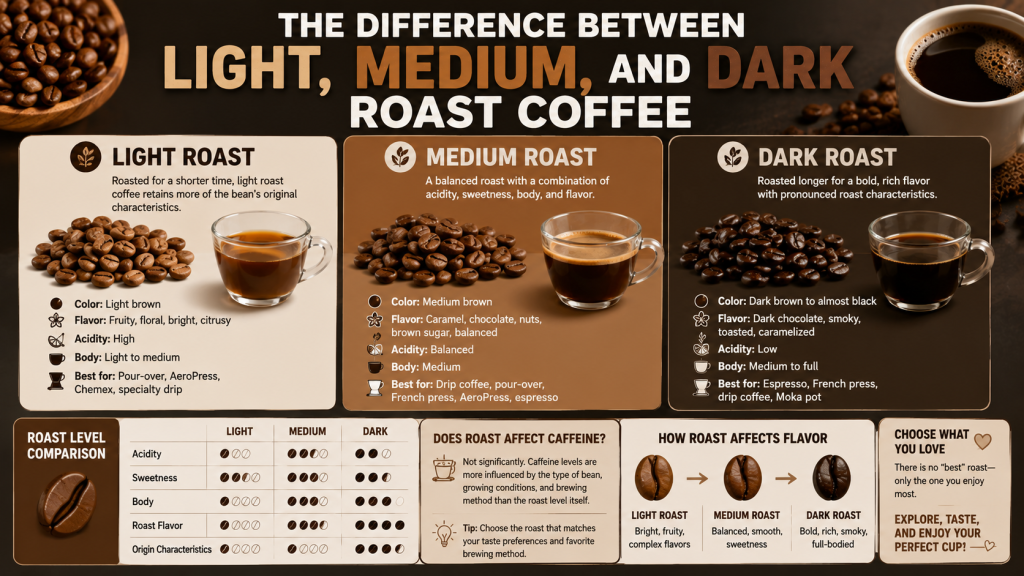
Choose beans based on your preferred flavor profile. Light roasts may offer brighter and more acidic flavors, while medium and dark roasts tend to provide deeper, richer notes.
Pay attention to the roast date. Coffee generally tastes best when brewed while the beans are relatively fresh.
Experiment with brewing methods. A good decaf coffee can work well in pour-over, French press, espresso, or cold brew preparations.
Final Thoughts
Decaf coffee is regular coffee that has undergone an additional process to remove most of its caffeine. Depending on the producer, caffeine can be removed using methods involving water, carbon dioxide, or food-grade solvents.
Although decaf coffee still contains a small amount of caffeine, modern decaffeination methods can produce beans with excellent flavor and aroma. For coffee drinkers who want to enjoy the taste and ritual of coffee while significantly reducing caffeine, decaf can be a great choice.
Ultimately, the best decaf coffee is one that matches your preferred flavor profile and brewing style. With the growing quality of specialty decaf coffee, reducing caffeine no longer means sacrificing an enjoyable cup.