Coffee is one of the world’s most popular sources of caffeine, but have you ever wondered exactly how much caffeine is in your cup?
The answer isn’t as simple as you might expect. Caffeine content can vary significantly depending on the type of coffee, the beans, the brewing method, the serving size, and even how the coffee is prepared.
A small cup of coffee might contain a moderate amount of caffeine, while a large café drink can contain considerably more.
Understanding how caffeine works can help you choose the right coffee for your energy needs without accidentally consuming more than you intended.
How Much Caffeine Is in a Cup of Coffee?
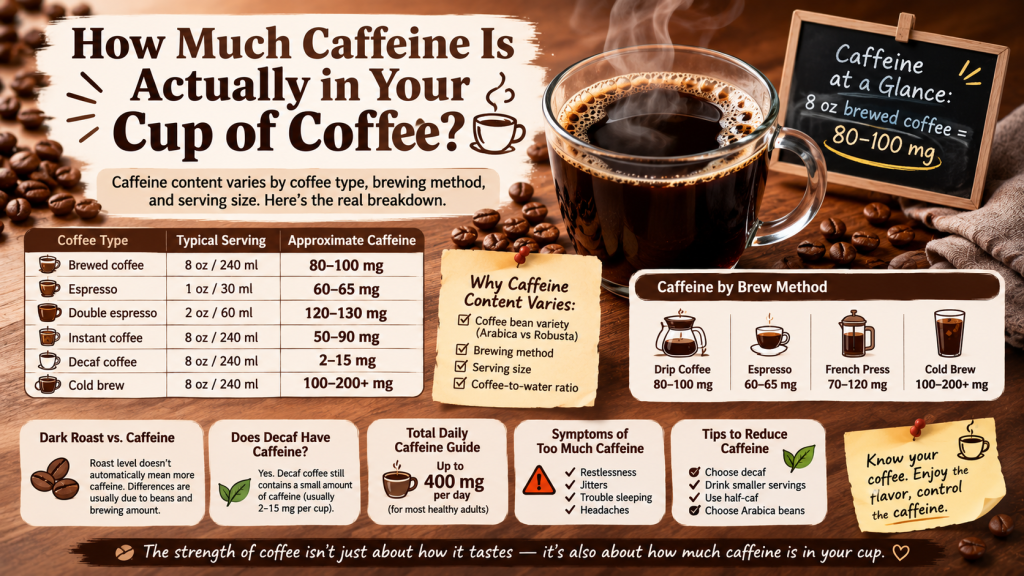
An average 8-ounce (240 ml) cup of brewed coffee contains roughly 80–100 mg of caffeine, although the actual amount can vary considerably.
Some coffees may contain less, while strong brews or large servings can contain significantly more.
Here are approximate caffeine amounts for common coffee drinks:
| Coffee Type | Typical Serving | Approximate Caffeine |
|---|---|---|
| Brewed coffee | 8 oz / 240 ml | 80–100 mg |
| Espresso | 1 oz / 30 ml | 60–65 mg |
| Double espresso | 2 oz / 60 ml | 120–130 mg |
| Instant coffee | 8 oz / 240 ml | 50–90 mg |
| Decaf coffee | 8 oz / 240 ml | 2–15 mg |
| Cold brew | 8 oz / 240 ml | 100–200+ mg |
These figures are estimates rather than fixed values. Actual caffeine content can differ from one coffee to another.
Why Does Caffeine Content Vary So Much?
Several factors determine how much caffeine ends up in your cup.
1. Coffee Bean Variety
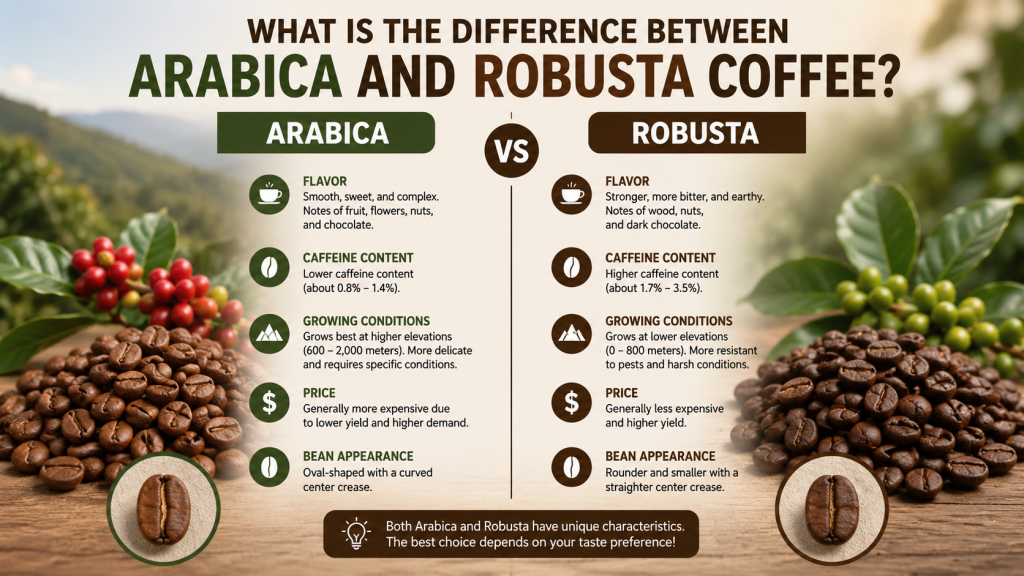
The two most common coffee species are Arabica and Robusta.
Arabica beans generally contain less caffeine than Robusta beans.
Robusta is often used in espresso blends because it can provide a stronger body, intense flavor, and additional caffeine.
This means two cups of coffee with the same serving size can have very different caffeine levels depending on the beans used.
2. Brewing Method
The way you brew coffee can significantly affect the amount of caffeine extracted.
For example, drip coffee allows hot water to remain in contact with ground coffee for several minutes, producing a relatively caffeine-rich beverage.
Espresso uses a short brewing time but high pressure and finely ground coffee. Despite its concentrated flavor, a single espresso shot often contains less total caffeine than a full 8-ounce cup of brewed coffee simply because the serving is much smaller.
Cold brew can also contain a substantial amount of caffeine, particularly when made as a concentrate.
3. Serving Size
Serving size is one of the easiest factors to overlook.
A standard cup is often considered around 8 ounces, but many coffee shops serve drinks that are much larger.
For example, if an 8-ounce coffee contains around 90 mg of caffeine, a much larger serving could contain significantly more depending on how it was brewed.
That’s why comparing caffeine by serving size is important.
4. Coffee-to-Water Ratio
Using more coffee grounds generally means there is more caffeine available for extraction.
If you make your coffee stronger by increasing the amount of ground coffee while keeping the amount of water the same, the final drink can contain more caffeine.
However, stronger flavor doesn’t always mean proportionally more caffeine. Extraction efficiency and brewing time also matter.
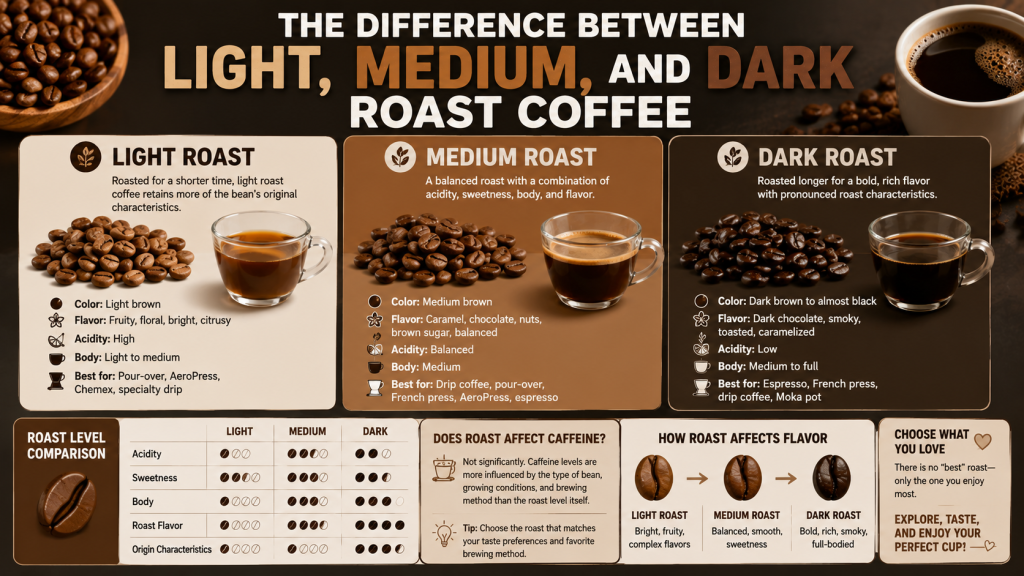
Does Dark Roast Coffee Have More Caffeine?
This is a common coffee myth.
Many people assume that dark roast coffee contains more caffeine because it tastes stronger and more intense.
In reality, roast level doesn’t have a simple relationship with caffeine content.
Caffeine is relatively stable during the roasting process. The bigger differences usually come from the amount of coffee used, the type of beans, and the way the coffee is measured and brewed.
Dark roast often tastes stronger because roasting changes the flavor compounds in the beans, not necessarily because it contains dramatically more caffeine.
Does Espresso Have More Caffeine Than Brewed Coffee?
Espresso is much more concentrated than regular coffee, but that doesn’t necessarily mean it contains more caffeine per serving.
A typical 1-ounce espresso shot may contain around 60–65 mg of caffeine, while an 8-ounce cup of brewed coffee may contain around 80–100 mg.
However, espresso is commonly served in multiple shots.
A double espresso can therefore provide roughly 120 mg or more of caffeine.
So when comparing caffeine, it’s important to consider the total serving size, not just how strong the coffee tastes.
What About Cold Brew?
Cold brew coffee can contain a substantial amount of caffeine.
Because cold brew is often made with a relatively high coffee-to-water ratio and steeped for many hours, it can produce a concentrated beverage.
Some ready-to-drink cold brews contain around 100–200 mg of caffeine per serving, while cold brew concentrates can contain much more before dilution.
If you’re making cold brew at home, the final caffeine content will depend on your recipe, the beans, the brewing ratio, and how much concentrate you dilute.
Does Decaf Coffee Have Caffeine?
Yes.
Decaf does not mean completely caffeine-free.
Most decaffeination processes remove the vast majority of caffeine, but a small amount can remain.
An 8-ounce cup of decaf coffee may contain only a few milligrams of caffeine, although the exact amount varies.
If you enjoy the taste of coffee but want to significantly reduce your caffeine intake, decaf can be a useful option.
How Much Caffeine Is Too Much?
Caffeine affects people differently.
Some people can drink several cups of coffee without noticing significant effects, while others may feel uncomfortable after just one cup.
For healthy adults, a commonly cited guideline is up to 400 mg of caffeine per day from all sources. However, individual sensitivity varies, and certain people may need to consume less.
Caffeine can also come from other foods and drinks, including:
- Tea
- Energy drinks
- Chocolate
- Soft drinks
- Pre-workout products
- Some medications
It’s therefore worth considering your total daily caffeine intake rather than coffee alone.
What Happens If You Drink Too Much Caffeine?
Consuming more caffeine than your body tolerates can cause symptoms such as:
- Restlessness
- Jitters
- Difficulty sleeping
- Increased alertness
- Headaches
- A racing or pounding heartbeat
- Stomach discomfort
The effects can vary depending on your sensitivity and how quickly you consume caffeine.
If coffee makes you feel overly stimulated, try reducing your serving size or switching to a lower-caffeine option.
When Is the Best Time to Drink Coffee?
There’s no single perfect time for everyone.
Many people enjoy coffee in the morning because caffeine can increase alertness and help them feel more awake.
However, caffeine can remain in the body for several hours. Drinking coffee too close to bedtime may interfere with sleep, particularly if you’re sensitive to caffeine.
If you notice that coffee affects your sleep, consider avoiding caffeinated coffee later in the day.
Does Adding Milk Reduce the Caffeine?
No.
Adding milk doesn’t remove or significantly reduce the caffeine already present in your coffee.
A latte may taste milder because the espresso is diluted with a larger amount of milk, but the caffeine from the espresso is still there.
For example, a latte made with one espresso shot contains approximately the same caffeine as that shot, regardless of how much milk is added.
The flavor becomes less intense, but the caffeine doesn’t disappear.
Does Sugar Change the Caffeine?
Sugar doesn’t reduce the amount of caffeine in coffee.
Adding sugar can make coffee taste smoother or less bitter, but the caffeine content remains essentially the same.
The same applies to syrups and other sweeteners.
A vanilla latte, caramel latte, or mocha can still contain a significant amount of caffeine even though the added flavors make the drink taste sweeter.
How to Reduce Caffeine in Your Coffee
If you want to enjoy coffee while consuming less caffeine, there are several simple strategies.
Choose Decaf
Decaf is one of the easiest ways to significantly reduce caffeine while still enjoying coffee.
Use Half-Caf
Combine regular coffee with decaf coffee.
This allows you to keep some of the caffeine while reducing the total amount.
Drink Smaller Servings
Instead of a large cup, choose a smaller serving.
You can still enjoy the flavor and ritual of coffee without consuming as much caffeine.
Choose Lower-Caffeine Beans
Arabica coffee generally contains less caffeine than Robusta, although the final amount still depends on preparation.
Avoid Multiple Shots
When ordering espresso-based drinks, remember that adding an extra shot also increases the caffeine content.
How to Get More Caffeine From Your Coffee
If you are looking for a stronger caffeine boost, the opposite strategies can help.
You can choose a larger serving, use a stronger coffee-to-water ratio, or select coffee made with higher-caffeine beans.
However, increasing caffeine isn’t always the best way to improve your coffee experience.
A well-brewed cup with balanced flavor can be much more enjoyable than simply making the coffee stronger.
Caffeine and Coffee: The Bottom Line
So, how much caffeine is actually in your cup of coffee?
For a typical 8-ounce cup of brewed coffee, around 80–100 mg is a reasonable estimate, but the actual amount can vary considerably.
Espresso is more concentrated but usually contains less caffeine per single serving. Cold brew can contain considerably more, particularly when served as a concentrate. Decaf contains only a small amount, while Robusta beans generally contain more caffeine than Arabica.
The most important thing to remember is that coffee strength, serving size, and caffeine content aren’t the same thing.
If you’re curious about your caffeine intake, pay attention to the type of beans, brewing method, serving size, and number of servings you consume throughout the day.
And if you simply want to enjoy your coffee, there’s no need to overthink it. Understanding the basics can help you make better choices while still enjoying the flavor and ritual of your favorite cup.