If you’ve ever heard that coffee dehydrates you, you may have wondered whether every cup of coffee is secretly working against your daily water intake.
The idea makes sense at first. Coffee contains caffeine, and caffeine has a mild diuretic effect, meaning it can increase urine production. But does drinking coffee actually cause dehydration?
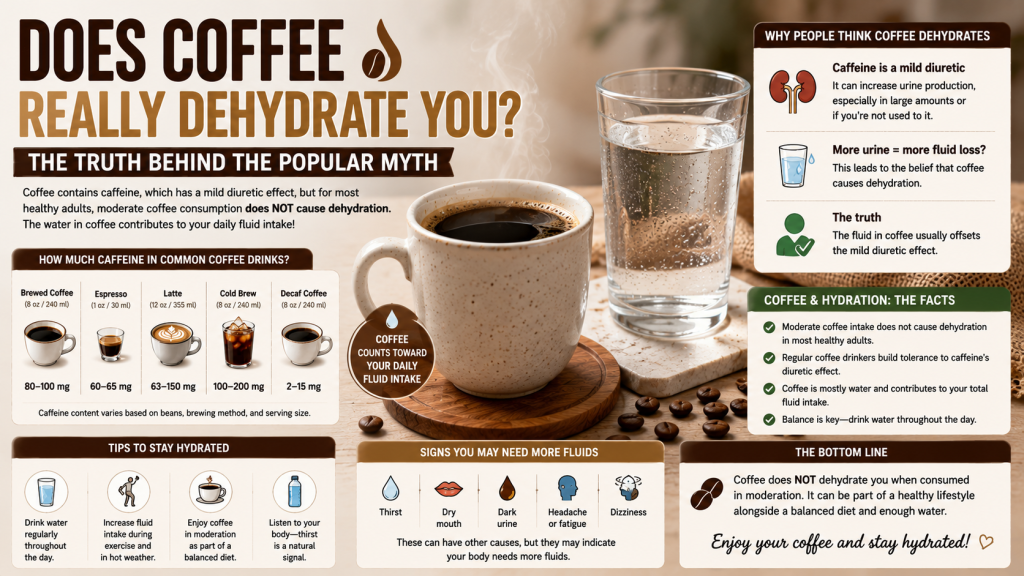
For most healthy adults, moderate coffee consumption does not significantly dehydrate you. The water contained in coffee contributes to your daily fluid intake, and your body generally compensates for caffeine’s mild diuretic effect.
Let’s take a closer look at where the dehydration myth comes from and what really happens when you drink coffee.
Why Do People Think Coffee Is Dehydrating?
The belief that coffee causes dehydration comes mainly from caffeine’s effect on the kidneys.
Caffeine can temporarily increase urine production. Because urinating more frequently can mean losing more water, it’s easy to assume that coffee must leave you dehydrated.
However, the situation is more complicated.
Coffee is mostly water. When you drink a cup of coffee, you’re not consuming caffeine alone—you’re also consuming a significant amount of fluid.
For people who regularly drink coffee, the body can also develop some tolerance to caffeine’s diuretic effects.
As a result, the amount of fluid you gain from a normal cup of coffee generally offsets the relatively small increase in fluid loss.
Does Caffeine Actually Make You Urinate More?
Yes, caffeine can have a mild diuretic effect.
Caffeine can influence kidney function and increase urine production, particularly when consumed in larger amounts or by people who aren’t accustomed to caffeine.
However, the effect varies from person to person.
Someone who rarely consumes caffeine may notice that coffee makes them need to use the bathroom more quickly. A regular coffee drinker may experience a much smaller effect.
This doesn’t mean caffeine has no effect on hydration. It simply means that the effect is usually not large enough for moderate coffee consumption to cause dehydration in healthy adults.
Does Coffee Count Toward Your Daily Water Intake?
Yes.
Coffee contributes to your overall fluid intake.
If you drink an 8-ounce cup of coffee, most of that beverage is water. Your body can use that fluid to support normal hydration.
This applies to many other caffeinated beverages as well, although drinks with large amounts of added sugar may have other nutritional considerations.
The important point is that coffee doesn’t automatically cancel out the water it contains.
You don’t need to drink an additional cup of water simply to “replace” every cup of coffee you drink.
What About Strong Coffee?
A very strong coffee or a large serving can contain considerably more caffeine than a standard cup.
Higher caffeine intake can increase the diuretic effect, especially if you’re not accustomed to caffeine.
However, this still doesn’t mean that every strong coffee will automatically cause dehydration.
The bigger concern with very large amounts of caffeine is that excessive intake can cause other unwanted effects, such as:
- Restlessness
- Jitters
- Difficulty sleeping
- Increased heart rate
- Headaches
- Stomach discomfort
So while moderate coffee consumption generally contributes to hydration, consuming very large amounts isn’t a good hydration strategy.
What About Espresso?
Espresso is highly concentrated, but a typical serving is quite small.
A single espresso shot contains relatively little liquid compared with a full cup of brewed coffee.
Because espresso is often consumed in small quantities, its overall contribution to daily fluid intake is also smaller.
However, drinking an espresso doesn’t suddenly cause dehydration. The same general principles about caffeine and hydration still apply.
If you drink espresso as part of a latte or cappuccino, the milk adds additional fluid to the beverage.
What About Cold Brew?
Cold brew can sometimes contain more caffeine than regular coffee, particularly when prepared as a concentrate.
The hydration effect depends on the final drink rather than simply the fact that it’s cold brew.
If you’re drinking a diluted cold brew with a moderate amount of caffeine, it still contributes to your fluid intake.
However, concentrated cold brew can deliver a large caffeine dose in a relatively small serving, so it’s important to pay attention to the recipe and serving size.
Does Adding Milk Change Hydration?
Adding milk doesn’t make coffee dehydrating.
In fact, milk adds even more fluid to the drink.
A latte, for example, contains espresso combined with a substantial amount of milk, making it a beverage that contributes both fluid and nutrients to your diet.
The same applies to plant-based milk alternatives, although their nutritional profiles vary.
Does Sugar Make Coffee Dehydrating?
Sugar doesn’t cause coffee to suddenly become dehydrating.
Adding sugar, flavored syrup, or caramel primarily changes the calorie and sugar content of the beverage.
If you drink heavily sweetened coffee regularly, the bigger nutritional consideration is usually the amount of added sugar rather than hydration.
For everyday coffee, you can choose the sweetness level that fits your preferences.
What Happens If You Drink Coffee Instead of Water All Day?
Although coffee contributes to hydration, it shouldn’t necessarily be your only source of fluids.
Water remains a simple and convenient choice for staying hydrated throughout the day.
If you replace most of your water intake with very strong coffee, you may consume more caffeine than is comfortable for you.
You may also experience side effects such as poor sleep or feeling jittery.
A balanced approach is better: enjoy coffee while also drinking water and getting fluids from other foods and beverages.
Does Coffee Dehydrate You During Exercise?
This is another area where the myth can be misleading.
Moderate caffeine consumption doesn’t automatically mean you become dehydrated during physical activity.
However, exercise increases your fluid needs because you lose water through sweat. Your hydration strategy should therefore take into account factors such as:
- Exercise duration
- Temperature
- Humidity
- Sweat rate
- Exercise intensity
- Individual hydration needs
Coffee can be part of your overall fluid intake, but it shouldn’t replace appropriate hydration before, during, or after prolonged exercise.
What About Coffee in Hot Weather?
Hot weather doesn’t make coffee inherently dehydrating.
However, when temperatures are high, your body may lose more water through sweating.
If you’re spending a long time outdoors in hot conditions, make sure you’re drinking enough fluids.
A cup of coffee can still contribute to your total fluid intake, but water may be a more practical choice when you need to replace fluids throughout the day.
Can Coffee Cause Dehydration in Some Situations?
There are situations where caffeine may contribute more noticeably to fluid loss.
For example, consuming a very large amount of caffeine in a short period can increase urine production.
People who are particularly sensitive to caffeine may also notice stronger effects.
If coffee makes you urinate frequently, feel uncomfortable, or experience other symptoms, reducing your caffeine intake may be helpful.
Individual circumstances also matter. People with certain medical conditions or specific fluid restrictions should follow advice from their healthcare professional rather than relying on general hydration guidelines.
How Much Coffee Is Reasonable?
For healthy adults, a commonly referenced guideline is up to about 400 mg of caffeine per day, although individual tolerance varies.
The amount of caffeine in coffee can vary widely depending on the beans, brewing method, serving size, and preparation.
For example, a standard cup of brewed coffee may contain roughly 80–100 mg of caffeine, while a large café beverage can contain substantially more.
It’s therefore useful to think about your total caffeine intake rather than simply counting cups.
Signs That You May Need More Fluids
Instead of worrying about whether coffee is dehydrating you, pay attention to your body’s hydration signals.
Possible signs of inadequate fluid intake include:
- Thirst
- Dry mouth
- Darker-than-usual urine
- Fatigue
- Headache
- Dizziness
These symptoms can have many possible causes, so they aren’t always proof of dehydration.
If you’re concerned about your hydration, increasing your fluid intake and paying attention to how you feel can be a good starting point.
Coffee vs. Water for Hydration
Water is still one of the simplest choices for hydration.
But coffee doesn’t have to be treated as the opposite of water.
A useful way to think about it is:
Water: Excellent everyday hydration choice.
Coffee: Provides fluid while also providing caffeine and coffee compounds.
Milk-based coffee: Provides fluid plus nutrients from the milk.
Very high-caffeine beverages: May provide fluid but can also deliver large amounts of caffeine, so moderation matters.
There’s no need to completely avoid coffee simply because you’re trying to stay hydrated.
The Truth Behind the Coffee Dehydration Myth
So, does coffee really dehydrate you?
For most healthy adults drinking moderate amounts, no.
Caffeine can have a mild diuretic effect, but the fluid in coffee generally offsets this effect. Regular coffee drinkers may also become less sensitive to caffeine’s diuretic effects over time.
Coffee therefore counts toward your overall fluid intake.
The key is moderation. Drinking coffee throughout the day is generally compatible with good hydration, but drinking excessive amounts of caffeine isn’t a substitute for a balanced fluid intake.
Final Thoughts
The idea that coffee automatically dehydrates you is one of those common health myths that sounds logical but doesn’t tell the whole story.
Caffeine can increase urine production, but a normal cup of coffee also contains plenty of water. For most healthy adults, moderate coffee consumption doesn’t cause meaningful dehydration.
So you don’t have to give up your morning coffee to stay hydrated.
Enjoy your coffee, drink water throughout the day, and pay attention to your body’s needs. The goal isn’t to choose between coffee and hydration—you can have both.
Which topic should come next: coffee health myths, caffeine facts, or coffee brewing tips?