Coffee is usually associated with energy, alertness, and productivity. So why do some people feel sleepy after drinking coffee instead of more awake?
It may seem strange, but there are several possible explanations. Caffeine affects everyone differently, and factors such as sleep quality, tolerance, genetics, timing, and even what you add to your coffee can influence how you feel afterward.
If your morning coffee sometimes makes you want to take a nap, here’s what may be happening.
How Caffeine Normally Makes You Feel More Awake
The main stimulant in coffee is caffeine.
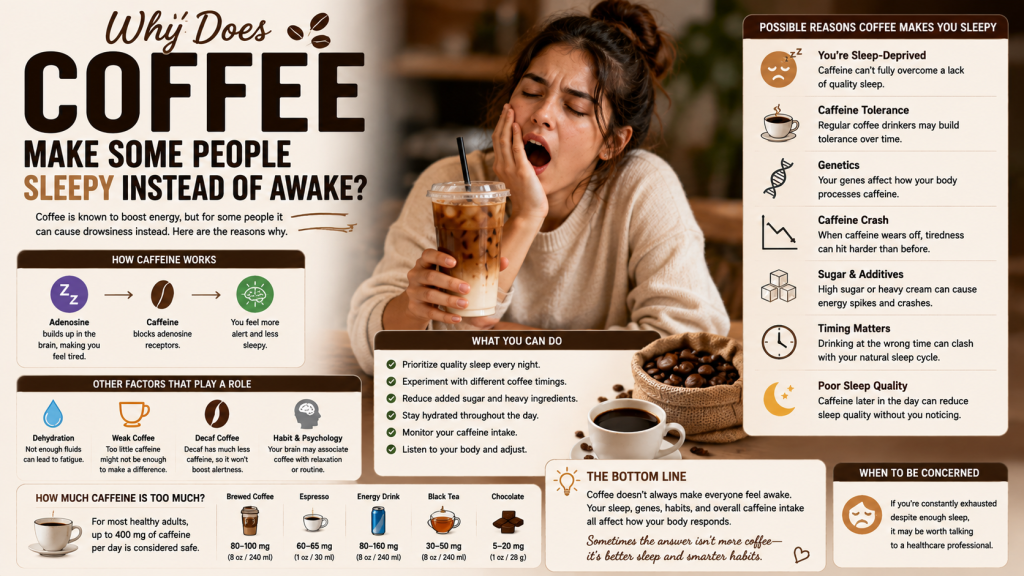
One of caffeine’s best-known effects is blocking adenosine, a chemical in the brain associated with sleep pressure and tiredness. Throughout the day, adenosine gradually builds up, making you feel increasingly sleepy.
Caffeine temporarily interferes with this process by occupying adenosine receptors.
As a result, you may feel:
- More alert
- Less tired
- More focused
- More energetic
- More mentally awake
However, caffeine doesn’t actually remove the need for sleep. It mainly changes how your brain perceives tiredness for a period of time.
That’s one reason coffee can sometimes seem to “stop working.”
You May Already Be Sleep-Deprived
One of the simplest explanations for feeling sleepy after coffee is that you’re genuinely tired.
If you haven’t been getting enough quality sleep, caffeine may not be powerful enough to completely overcome your sleep debt.
You might feel a temporary increase in alertness, but your underlying fatigue can still be present.
For example, imagine you’ve had several nights of poor sleep. You drink coffee in the morning and initially feel more focused. A few hours later, however, the tiredness becomes noticeable again.
The coffee didn’t necessarily make you sleepy. It may simply not have been enough to overcome your existing fatigue.
Your Body Can Develop Caffeine Tolerance
If you drink coffee every day, your body can adapt to regular caffeine exposure.
Over time, you may notice that the same cup of coffee doesn’t produce the strong alertness you experienced when you first started drinking it.
This is known as caffeine tolerance.
Your body can adapt to caffeine’s effects, meaning you may need more caffeine to experience the same noticeable stimulation.
That doesn’t mean drinking increasingly large amounts of coffee is the best solution.
Instead, if caffeine seems less effective than it used to be, consider looking at your sleep, caffeine timing, and overall consumption.
Genetics Can Affect Your Response to Caffeine
People don’t all process caffeine in exactly the same way.
Genetic differences can influence how quickly your body metabolizes caffeine and how strongly you respond to it.
Some people are naturally more sensitive to caffeine, while others can drink coffee late in the day and barely notice its effects.
This is one reason your experience with coffee may be completely different from someone else’s.
Your friend might drink an espresso at night and sleep normally, while your afternoon coffee could keep you awake for hours.
You May Be Experiencing a Caffeine “Crash”
Some people describe feeling tired after the effects of caffeine begin to wear off.
Caffeine can temporarily reduce your perception of tiredness, but it doesn’t replace sleep or eliminate the body’s need for rest.
When the stimulating effects become less noticeable, your underlying fatigue may become more obvious.
This can feel like a sudden “crash.”
The effect may be particularly noticeable if you were already exhausted before drinking coffee.
Sugar Could Be Part of the Problem
Sometimes the coffee itself isn’t the only thing affecting how you feel.
If your coffee contains a large amount of sugar, flavored syrup, whipped cream, or other sweet ingredients, the overall drink can provide a substantial amount of sugar and calories.
A heavily sweetened coffee may feel very different from a plain black coffee.
Some people experience changes in energy and appetite after consuming a large amount of sugar, which can contribute to feeling sluggish afterward.
If you regularly feel sleepy after sweet coffee drinks, try comparing how you feel after drinking plain coffee or a lightly sweetened version.
You May Be Drinking Coffee at the Wrong Time
Timing can make a surprisingly big difference.
Your body naturally follows a circadian rhythm, which regulates sleepiness and alertness throughout the day.
There are periods when your natural alertness changes, and drinking coffee during a period of increased sleepiness may not completely eliminate that feeling.
For some people, coffee immediately after waking may also feel less noticeable than coffee consumed later.
That doesn’t mean there’s one perfect coffee time for everyone. Your ideal timing depends on your sleep schedule, caffeine sensitivity, and daily routine.
Coffee Can Affect Your Sleep Even If You Fall Asleep Normally
Here’s an interesting part of the caffeine story: you may be sleeping, but your sleep quality can still be affected by caffeine.
Caffeine can remain in your body for several hours.
If you drink coffee later in the day, the caffeine may still be active around bedtime, even if you don’t feel particularly stimulated.
Poorer sleep quality can contribute to tiredness the following day.
That can create a cycle:
Coffee → later caffeine → poorer sleep → morning fatigue → more coffee.
If you’re frequently tired despite drinking coffee, examining your caffeine timing may be worthwhile.
Dehydration Usually Isn’t the Main Explanation
You may have heard that coffee makes you sleepy because it dehydrates you.
While caffeine can have a mild diuretic effect, moderate coffee consumption generally still contributes to your daily fluid intake.
For most healthy adults, dehydration isn’t the most likely explanation for feeling sleepy after an ordinary cup of coffee.
However, if you’re not drinking enough fluids overall, dehydration can contribute to fatigue.
So it’s still a good idea to drink water throughout the day.
Could Your Coffee Be Too Weak?
Sometimes the opposite problem is happening: you’re simply not getting much caffeine.
The caffeine content of coffee can vary significantly depending on:
- Coffee variety
- Brewing method
- Serving size
- Amount of coffee used
- Roast and blend
- Preparation method
For example, a small cup made with a relatively low-caffeine coffee may have a much smaller effect than a large serving of strong brewed coffee.
However, increasing caffeine isn’t necessarily the answer if you’re already consuming a lot.
The goal should be finding a level that works for you rather than constantly chasing a stronger effect.
Does Dark Roast Have More Caffeine?
Not necessarily.
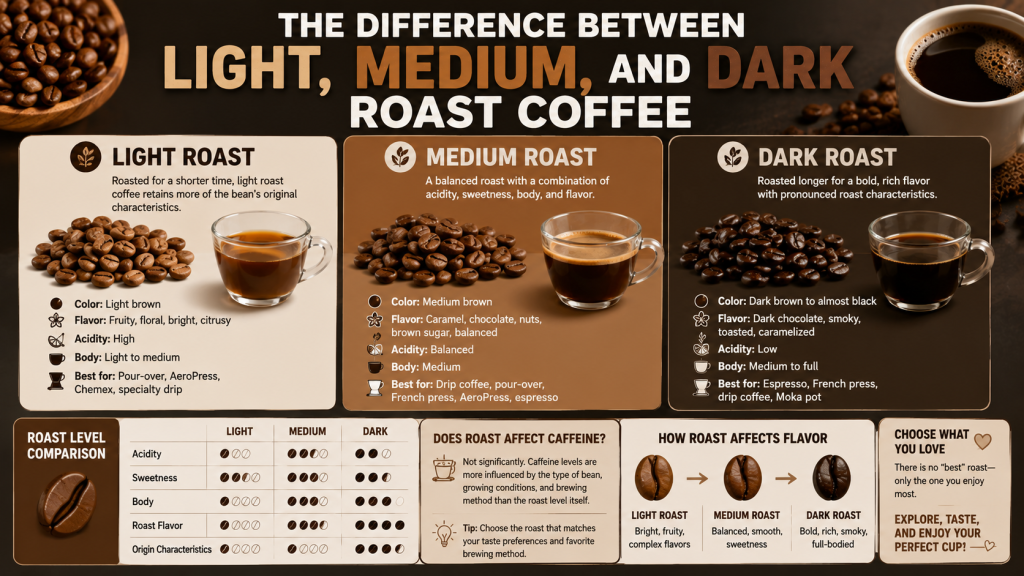
Dark roast coffee often tastes stronger because roasting creates deeper, more intense flavors.
But a stronger-tasting coffee isn’t automatically much higher in caffeine.
Caffeine content depends more on factors such as the type of beans, amount of coffee used, and brewing method.
So switching from medium roast to dark roast may change the flavor of your coffee without dramatically changing how alert you feel.
What About Decaf Coffee?
If you’re drinking decaf and feeling sleepy, the explanation is fairly straightforward: decaf contains much less caffeine than regular coffee, although it isn’t completely caffeine-free.
Decaf can be a good option if you enjoy the taste and ritual of coffee without wanting a strong stimulant effect.
If you expect decaf to provide the same alertness as regular coffee, however, you may be disappointed.
Coffee Can Become Part of a Habit
There’s also a psychological component to your daily coffee routine.
If you always drink coffee when you’re tired, your brain may associate coffee with your morning routine, work, or relaxation.
The ritual itself can influence how you feel.
The smell of freshly brewed coffee, sitting down with a familiar mug, and taking a break can all become associated with your daily routine.
That’s one reason coffee can be enjoyable even when its stimulating effects aren’t especially strong.
What Can You Do If Coffee Makes You Sleepy?
If coffee consistently makes you feel tired, don’t immediately assume you need more caffeine.
Try a few simple changes instead.
Check Your Sleep
Ask yourself whether you’re actually getting enough quality sleep.
No coffee can reliably replace adequate rest.
Adjust Your Coffee Timing
Experiment with drinking coffee at a different time of day and see whether your response changes.
Reduce Added Sugar
If your coffee contains lots of syrup or sugar, try a less sweet version and compare how you feel.
Drink Enough Water
Make sure coffee isn’t your only beverage throughout the day.
Monitor Your Caffeine Intake
Keep track of how much caffeine you’re getting from coffee, tea, energy drinks, chocolate, and other sources.
Pay Attention to Your Body
Everyone responds to caffeine differently.
If a particular amount makes you feel tired, jittery, anxious, or uncomfortable, that may be useful information about your personal tolerance.
Should You Drink More Coffee If You’re Sleepy?
Usually, more isn’t automatically better.
Increasing your caffeine intake can lead to unwanted effects such as:
- Jitters
- Restlessness
- Headaches
- Difficulty sleeping
- Increased heart rate
- Anxiety or nervousness
And if late-day caffeine interferes with your sleep, drinking more coffee can potentially make the original problem worse.
Instead of continually increasing your caffeine intake, focus on finding out why you’re tired in the first place.
When Should You Be Concerned About Persistent Sleepiness?
Occasionally feeling sleepy after coffee isn’t necessarily a cause for concern.
However, if you’re consistently exhausted despite getting adequate sleep, or if excessive daytime sleepiness is interfering with your daily activities, it may be worth discussing it with a healthcare professional.
Persistent tiredness can have many possible causes, and caffeine isn’t always the explanation.
Final Thoughts
So, why does coffee make some people sleepy instead of awake?
There isn’t one universal answer.
You may already be sleep-deprived, have developed caffeine tolerance, process caffeine differently because of genetics, drink coffee at a time that interferes with your sleep, or simply respond to caffeine differently from other people.
Coffee can temporarily increase alertness, but it can’t replace the restorative effects of sleep.
If your usual cup of coffee leaves you reaching for a pillow instead of feeling energized, try looking at your sleep, caffeine habits, drink ingredients, and timing before simply adding another cup.