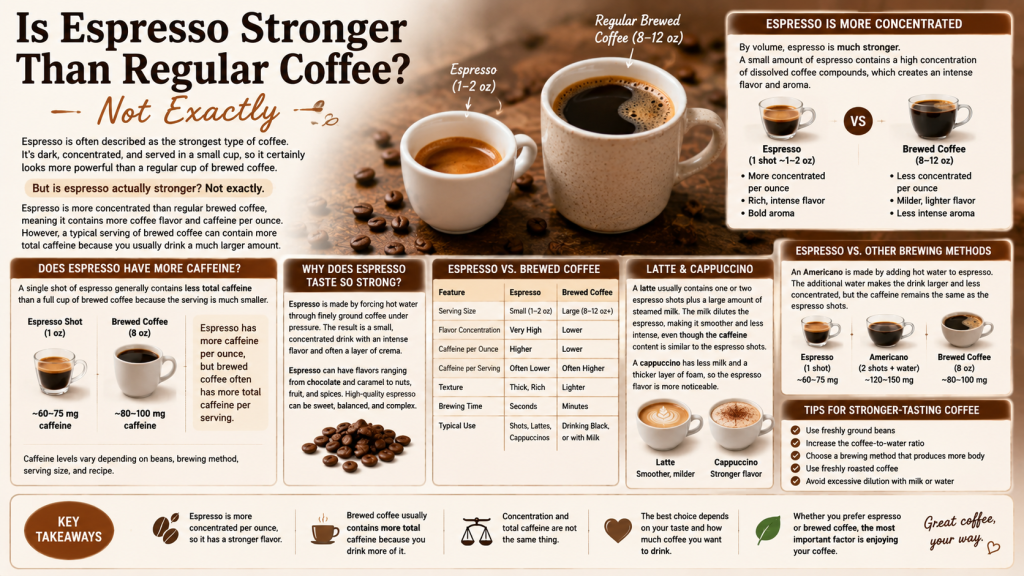
Espresso is often described as the strongest type of coffee. It’s dark, concentrated, and served in a small cup, so it certainly looks more powerful than a regular cup of brewed coffee.
But is espresso actually stronger?
Not exactly.
Espresso is more concentrated than regular brewed coffee, meaning it contains more coffee flavor and caffeine per ounce. However, a typical serving of brewed coffee can contain more total caffeine because you usually drink a much larger amount.
Understanding the difference between concentration, flavor, and total caffeine can help explain why espresso tastes so strong without necessarily giving you more caffeine.
What Makes Espresso Different?
Espresso is made by forcing hot water through finely ground coffee under pressure.
The process produces a small, concentrated drink with an intense aroma, rich flavor, and often a layer of crema on top.
A typical espresso shot is only around 1–2 ounces, depending on the preparation.
Regular brewed coffee is made by allowing hot water to pass through or steep with ground coffee for a longer period. The final beverage is much larger, often around 8–12 ounces or more.
This difference in serving size is important when comparing the two.
Espresso Is More Concentrated
If you compare coffee concentration by volume, espresso is much stronger.
A small amount of espresso contains a relatively high concentration of dissolved coffee compounds.
That’s why a sip of espresso can taste:
- Rich
- Intense
- Bitter or sweet
- Aromatic
- Full-bodied
Regular brewed coffee is more diluted because it contains much more water relative to the amount of extracted coffee.
So when people say espresso is “stronger,” they are often talking about concentration and flavor intensity.
Does Espresso Have More Caffeine?
This is where things become interesting.
A single shot of espresso generally contains less total caffeine than a full cup of brewed coffee because the serving is much smaller.
For example, a typical espresso shot may contain roughly 60–75 mg of caffeine, while an 8-ounce cup of brewed coffee can contain around 80–100 mg.
However, caffeine levels vary considerably depending on the coffee beans, brewing method, serving size, and recipe.
So:
Espresso: More caffeine per ounce.
Brewed coffee: Often more caffeine per serving because you drink more of it.
That’s why a small espresso can taste much more intense without necessarily containing more caffeine than your morning coffee.
Why Does Espresso Taste So Strong?
Espresso has a concentrated flavor profile.
The brewing process extracts coffee compounds into a relatively small amount of water, creating a dense and intense beverage.
Espresso can have flavors ranging from:
- Chocolate
- Caramel
- Nuts
- Fruit
- Citrus
- Spices
- Dark cocoa
Depending on the beans and roast, espresso doesn’t necessarily have to taste extremely bitter.
High-quality espresso can actually be sweet, balanced, and surprisingly complex.
Is Dark Roast Espresso Stronger?
Not necessarily.
Espresso is a brewing method, not a specific roast level.
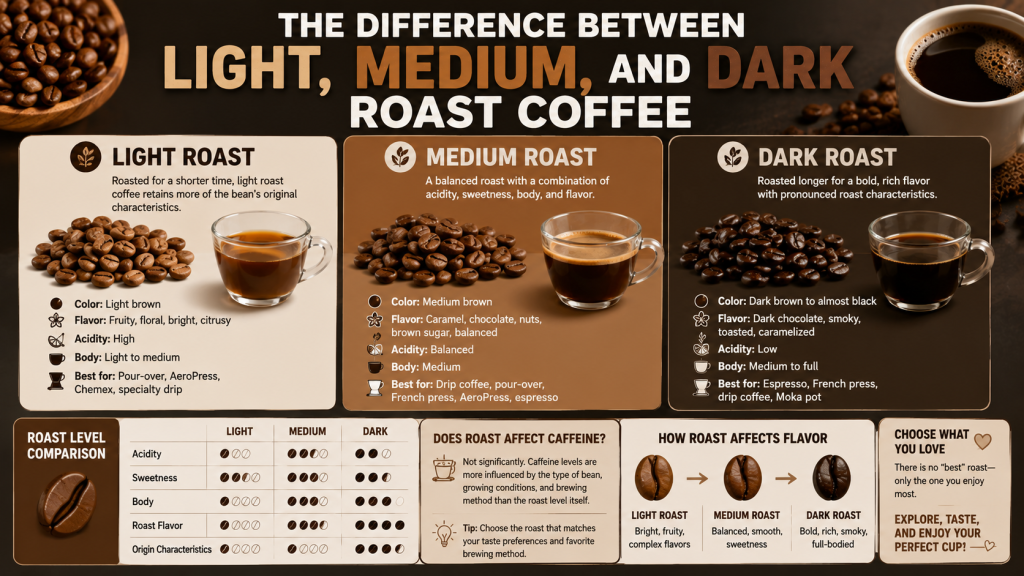
You can make espresso using light, medium, or dark roasted beans.
Dark roast espresso often tastes stronger because roasting produces deeper, more intense flavors. However, that doesn’t automatically mean it contains significantly more caffeine.
A light roast can produce a surprisingly vibrant espresso with fruity or floral notes, while a dark roast may taste richer and more chocolatey.
The word “strong” can therefore mean different things depending on what you’re describing.
Espresso vs. Brewed Coffee: A Simple Comparison
| Feature | Espresso | Regular Brewed Coffee |
|---|---|---|
| Serving size | Small | Larger |
| Flavor concentration | Very high | Lower |
| Caffeine per ounce | Higher | Lower |
| Caffeine per serving | Often lower | Often higher |
| Texture | Thick and concentrated | Lighter |
| Brewing time | Usually very short | Usually several minutes |
| Typical use | Shots, lattes, cappuccinos | Drinking black or with milk |
The biggest takeaway is that concentration and total caffeine are not the same thing.
What About a Double Espresso?
A double espresso contains approximately twice the amount of coffee and caffeine as a single shot, depending on the recipe.
That can bring the caffeine content closer to—or sometimes beyond—that of a typical cup of brewed coffee.
However, serving sizes and recipes vary between cafés.
If you’re monitoring caffeine intake, it’s better to consider the actual amount of caffeine in the drink rather than assuming that one “shot” always contains a specific amount.
Why Can a Latte Taste Less Strong?
A latte usually contains one or two shots of espresso combined with a relatively large amount of steamed milk.
The espresso itself is still concentrated, but the milk dilutes its intensity.
This makes a latte taste:
- Creamier
- Smoother
- Sweeter
- Less bitter
- Less concentrated
Interestingly, a latte can contain the same amount of caffeine as the espresso shots used to make it.
The milk changes the flavor and texture, not necessarily the amount of caffeine.
What About a Cappuccino?
A cappuccino also uses espresso, but it typically contains less milk than a latte and has a thicker layer of foam.
As a result, the espresso flavor can be more noticeable.
A cappuccino can taste stronger than a latte even if both drinks contain the same number of espresso shots.
Again, this demonstrates why flavor intensity and caffeine content aren’t the same thing.
Does Espresso Give You Energy Faster?
Espresso is often associated with a quick energy boost because it’s concentrated and commonly consumed in a small amount.
However, the caffeine still needs to be absorbed by your body before you feel its effects.
The speed and intensity of the effect depend on factors such as:
- How much caffeine you consume
- Whether you’ve eaten recently
- Your caffeine tolerance
- Your individual metabolism
- Your sensitivity to caffeine
Drinking espresso doesn’t mean the caffeine automatically works dramatically faster than caffeine from brewed coffee.
Which Has More Caffeine: Espresso or Americano?
An Americano is usually made by adding hot water to espresso.
The additional water makes the drink larger and less concentrated, but it doesn’t remove the caffeine from the espresso.
For example, an Americano made with two espresso shots contains roughly the caffeine from those two shots, regardless of how much water is added.
This means an Americano can taste similar in volume to brewed coffee while still having the caffeine profile of its espresso shots.
Can Espresso Be Less Bitter Than Regular Coffee?
Absolutely.
Many people assume that espresso must taste bitter because it is concentrated.
But bitterness depends on many factors, including:
- Coffee variety
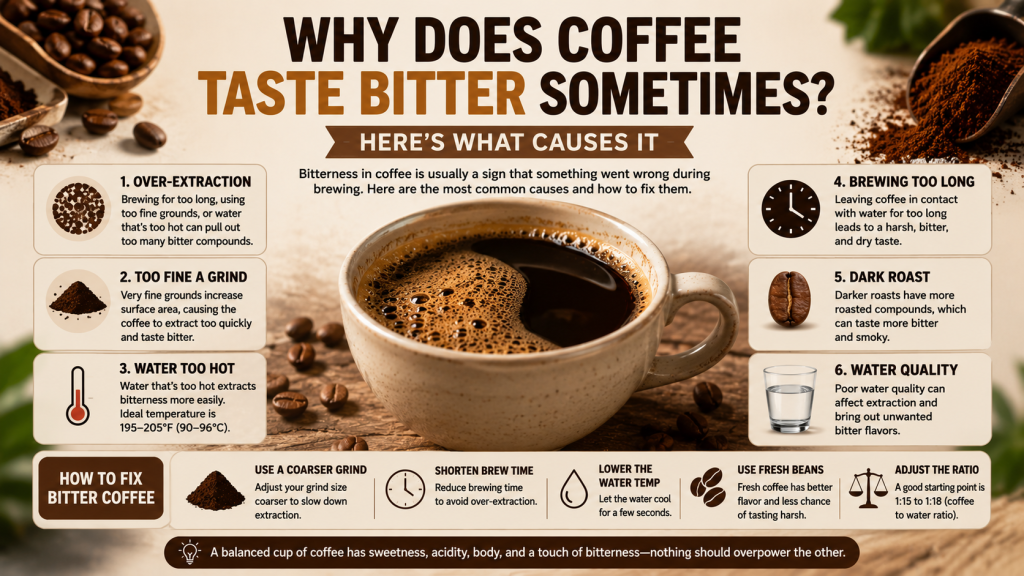
- Roast level
- Grind size
- Brewing temperature
- Extraction time
- Coffee freshness
- Brewing technique
A well-prepared espresso can have sweetness, acidity, and complex flavors.
Meanwhile, poorly brewed regular coffee can taste extremely bitter.
So espresso isn’t automatically more bitter simply because it’s more concentrated.
Why Does Espresso Have Crema?
One of espresso’s most recognizable features is the golden-brown layer on top called crema.
Crema forms when gases and coffee compounds are emulsified during the high-pressure brewing process.
It contributes to the aroma, texture, and visual appearance of espresso.
Although crema is associated with quality, its presence alone doesn’t tell you whether an espresso tastes good.
The quality of the beans and brewing process still matter.
Which One Should You Drink?
The best choice depends on what you want from your coffee.
Choose Espresso If You Want:
- A concentrated flavor
- A small serving
- A quick coffee experience
- A base for milk drinks
- Strong coffee character
Choose Brewed Coffee If You Want:
- A larger drink
- Something to sip slowly
- A longer coffee experience
- More total caffeine from a typical serving
- A lighter, more diluted flavor
Neither option is automatically “stronger” in every sense.
How to Make Your Coffee Taste Stronger
If you enjoy a stronger-tasting coffee, you don’t necessarily need to switch to espresso.
You can try:
- Using freshly ground beans
- Increasing the coffee-to-water ratio
- Choosing a brewing method that produces a fuller body
- Using freshly roasted coffee
- Grinding your beans appropriately
- Avoiding excessive dilution with milk or water
However, making coffee taste stronger doesn’t necessarily mean increasing its caffeine content by the same amount.
The Bottom Line
So, is espresso stronger than regular coffee?
The answer depends on what you mean by “stronger.”
Espresso is much more concentrated per ounce, which gives it its intense flavor and thick texture. But a typical serving of brewed coffee is much larger and can contain more total caffeine than a single espresso shot.
That’s why a tiny espresso can taste incredibly powerful without necessarily delivering more caffeine than a full mug of coffee.
The next time someone says espresso is simply “stronger coffee,” remember that there’s more to the story. Concentration, flavor, serving size, and caffeine are four different things.
Ultimately, whether you prefer espresso or brewed coffee comes down to how you like your coffee to taste and how much you want to drink.