Coffee is one of the world’s most popular beverages, loved for its rich flavor and ability to help you feel more alert. But for some people, that same cup of coffee can cause an uncomfortable feeling of anxiety, nervousness, or restlessness.
You may notice a racing heart, shaky hands, difficulty relaxing, or a mind that suddenly feels much more active than usual.
So, why does coffee sometimes make you feel anxious?
The main reason is caffeine, a natural stimulant that affects your brain and nervous system. However, caffeine sensitivity, the amount you drink, when you drink it, and even whether you’ve eaten can all influence how strongly you react.
How Caffeine Can Trigger Anxiety
Caffeine works primarily by blocking adenosine, a chemical in the brain that promotes feelings of tiredness and relaxation.
When adenosine is blocked, you feel more awake and alert.
Caffeine can also increase activity in the body’s nervous system. This can be useful when you need to concentrate, but in some people, the effect can feel excessive.
Instead of simply feeling energized, you might experience:
- Nervousness
- Restlessness
- Shakiness
- Rapid heartbeat
- Racing thoughts
- Difficulty relaxing
- Irritability
- A feeling of being “on edge”
These sensations can sometimes resemble symptoms of anxiety, which is why a strong cup of coffee can make an otherwise normal day feel unexpectedly uncomfortable.
Everyone Responds to Caffeine Differently
One person might drink several cups of coffee without any noticeable problems, while another person may feel anxious after just one cup.
This difference is partly related to individual caffeine sensitivity.
Your response can be influenced by factors such as:
- Genetics
- Caffeine tolerance
- Body size
- Metabolism
- Sleep quality
- How much caffeine you normally consume
- Whether you have eaten recently
- Other sources of caffeine
This means there isn’t one amount of coffee that affects everyone in exactly the same way.
Drinking Too Much Coffee Can Make Anxiety Worse
One of the most obvious reasons coffee can make you anxious is simply consuming too much caffeine.
The more caffeine you consume, the more noticeable its stimulating effects may become.
A single cup may feel comfortable, while a second or third cup later in the day could push you past your personal comfort level.
Remember that caffeine doesn’t only come from coffee.
You may also get caffeine from:
- Tea
- Energy drinks
- Chocolate
- Cola
- Pre-workout products
- Some medications
If you’re already consuming caffeine from several sources, your total daily intake may be higher than you realize.
Coffee Can Make Your Heart Beat Faster
Caffeine can temporarily increase nervous system activity, and some people notice changes in their heartbeat after drinking coffee.
You may feel your heart beating more strongly or quickly.
For someone who is sensitive to these physical sensations, this can create a cycle:
Caffeine → noticeable physical sensations → worry about those sensations → increased anxiety.
In other words, the caffeine itself may cause a physical response, while your reaction to that response can make the feeling of anxiety even stronger.
Drinking Coffee on an Empty Stomach
Some people find that coffee feels much stronger when they drink it without eating.
Food can affect how quickly caffeine and other compounds are absorbed and how you experience their effects.
If you regularly feel shaky or uncomfortable after your first coffee of the day, try having breakfast before or alongside your coffee.
A simple meal containing carbohydrates, protein, and healthy fats may make the experience feel more comfortable.
Lack of Sleep Can Make Caffeine Feel Stronger
Poor sleep and caffeine can create an unfortunate cycle.
When you’re tired, you may drink more coffee to compensate.
But consuming too much caffeine, particularly later in the day, can interfere with sleep.
Then you wake up tired and rely on more coffee the next morning.
This can lead to:
Poor sleep → more coffee → increased stimulation → difficulty sleeping → more fatigue.
If coffee suddenly seems to make you more anxious than usual, consider whether you’ve been getting enough sleep.
Stress Can Change Your Reaction to Coffee
Your mental state before drinking coffee matters too.
If you’re already stressed about work, studying, finances, deadlines, or other responsibilities, caffeine may intensify the physical feeling of being stimulated.
A cup of coffee that feels perfectly comfortable on a relaxed weekend might feel very different during a stressful day.
This doesn’t necessarily mean coffee is the underlying cause of your anxiety. It may simply amplify sensations that are already present.
Why Does Coffee Sometimes Feel Fine and Other Times Make You Anxious?
It’s common for someone’s response to caffeine to vary from day to day.
For example, coffee might feel completely normal when you’ve:
- Slept well
- Eaten breakfast
- Had plenty of water
- Exercised
- Had only a small amount of caffeine
But the same coffee might make you feel uncomfortable when you’ve:
- Slept poorly
- Skipped breakfast
- Had several coffees already
- Been under significant stress
- Consumed caffeine late in the day
Your body’s response isn’t always determined by the coffee alone.
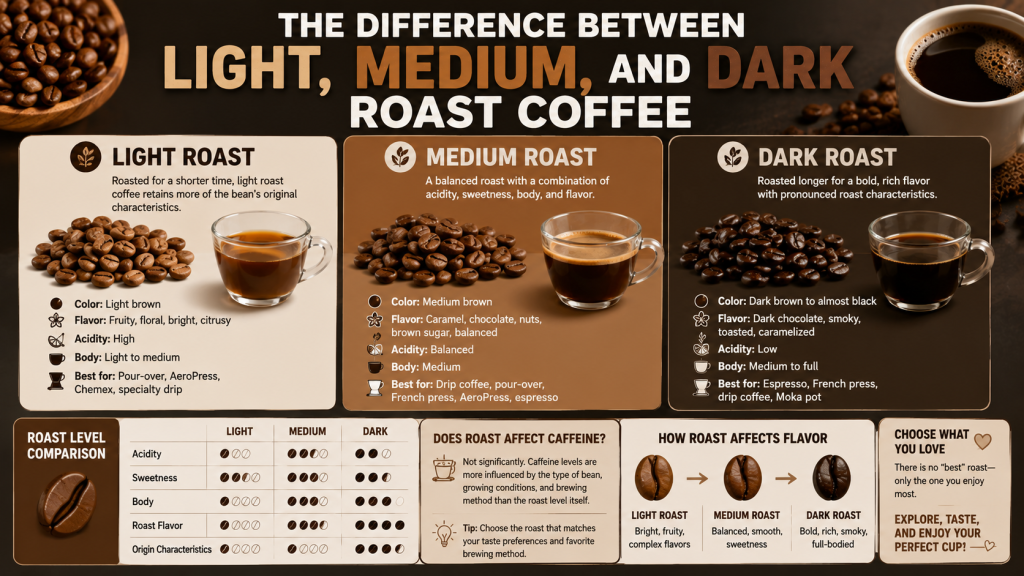
Does Dark Roast Coffee Cause More Anxiety?
Not necessarily.
Many people assume dark roast coffee contains significantly more caffeine because it tastes stronger.
However, flavor strength and caffeine content are not the same thing.
Dark roast coffee tends to have deeper, more intense flavors, but caffeine levels depend on several factors, including the type and amount of coffee used and the brewing method.
If you’re sensitive to caffeine, switching roast levels may not solve the problem by itself.
Pay more attention to the amount of coffee you’re drinking.
What About Espresso?
Espresso is highly concentrated, but the serving size is small.
A single espresso shot can contain less total caffeine than a large mug of brewed coffee, even though espresso has much more caffeine per ounce.
However, drinks containing multiple espresso shots can add up quickly.
For example, a large latte made with two or three shots may contain substantially more caffeine than you expect.
If coffee makes you anxious, check how many shots are in your usual drink.
Can Decaf Coffee Help?
If caffeine is the main reason you’re experiencing coffee-related anxiety, switching to decaf may help.
Decaf coffee isn’t completely caffeine-free, but it contains substantially less caffeine than regular coffee.
This allows you to keep much of the coffee-drinking experience while reducing your caffeine intake.
You can also try gradually replacing regular coffee with decaf rather than making the switch overnight.
How to Reduce Coffee-Related Anxiety
If you enjoy coffee but don’t like how it makes you feel, you don’t necessarily have to quit completely.
Try these simple adjustments.
Reduce Your Portion
Instead of a large mug, try a smaller serving.
You may find that you still get the alertness you want without the uncomfortable stimulation.
Drink Coffee Earlier
Avoiding caffeine later in the day can help protect your sleep, which may also reduce next-day fatigue and anxiety.
Choose Half-Caf
Mix regular coffee with decaf to reduce the overall caffeine content while maintaining a familiar coffee flavor.
Eat Before Drinking Coffee
If coffee makes you feel shaky on an empty stomach, have something to eat first.
Drink Water
Make sure you’re drinking enough fluids throughout the day instead of relying entirely on coffee.
Slow Down
Instead of drinking your coffee quickly, sip it gradually.
This can make the caffeine experience feel less intense for some people.
Should You Stop Drinking Coffee Completely?
Not necessarily.
If you enjoy coffee and it doesn’t cause uncomfortable symptoms, there’s no universal reason that you need to eliminate it.
The goal is to understand your personal tolerance.
You might discover that one small cup in the morning feels great, while a large afternoon coffee makes you restless.
In that case, you don’t necessarily need to give up coffee—you may simply need to adjust your routine.
When Should You Consider Cutting Back?
It may be worth reducing caffeine if you regularly notice that coffee causes:
- Significant nervousness
- Persistent restlessness
- Difficulty sleeping
- Shaking or trembling
- Uncomfortable heart sensations
- Racing thoughts
- Irritability
Keeping a simple coffee diary can help.
Write down how much caffeine you consume, when you drink it, and how you feel afterward.
After a few days, you may notice a pattern.
How Long Does Caffeine Stay in Your Body?
Caffeine doesn’t disappear immediately after you finish your coffee.
Its effects can last for several hours, although the experience varies from person to person.
This is one reason afternoon or evening coffee can sometimes affect nighttime sleep even when you don’t feel particularly stimulated.
If you’re sensitive to caffeine, consider limiting coffee to earlier in the day.
Better sleep can make a significant difference in how you feel the following morning.
What If You Already Feel Anxious After Drinking Coffee?
If you’ve had coffee and suddenly feel anxious, don’t panic.
Try taking slow, comfortable breaths and remind yourself that the uncomfortable sensations can pass as the caffeine’s effects diminish.
Avoid adding more caffeine while you’re already feeling stimulated.
You can also drink water, have a meal or snack, and move to a calm environment.
If symptoms are severe, unusual, or concerning—especially significant chest pain, fainting, severe shortness of breath, or a sustained irregular heartbeat—seek appropriate medical attention rather than assuming it’s simply coffee.
The Bottom Line
So, why does coffee sometimes make you feel anxious?
The main culprit is caffeine, which stimulates the nervous system and can produce physical sensations such as increased alertness, restlessness, and a faster heartbeat. For people who are sensitive to those effects, they can feel similar to anxiety.
Your reaction can also depend on how much coffee you drink, your sleep, stress levels, whether you’ve eaten, and your individual sensitivity to caffeine.
The good news is that you don’t necessarily have to give up coffee completely. Try reducing your serving size, drinking it earlier, choosing half-caf or decaf, and paying attention to how your body responds.