If you’ve ever looked at a specialty coffee menu or a bag of premium beans, you’ve probably seen the term “single-origin coffee.” It sounds simple, but what does it actually mean?
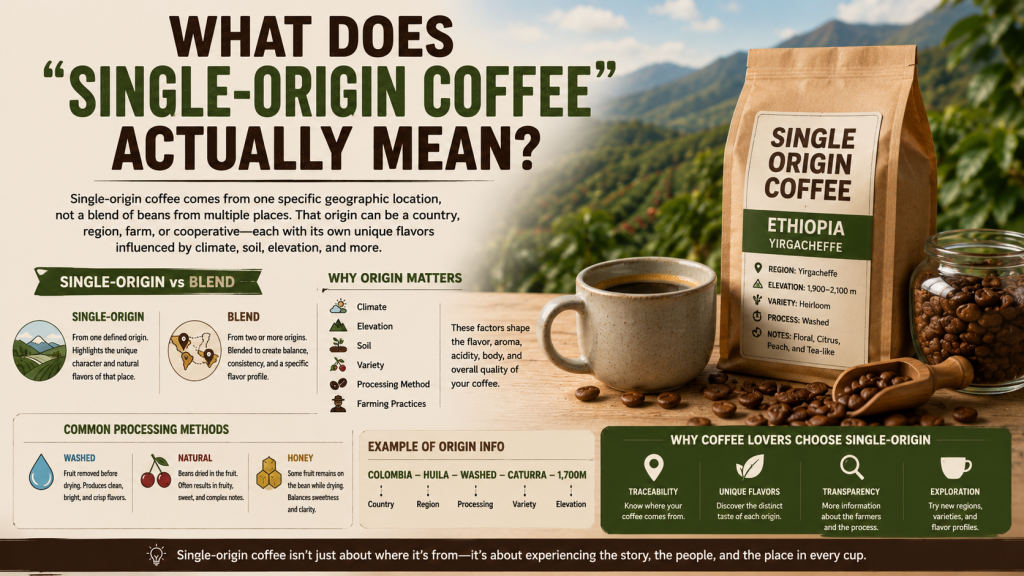
In general, single-origin coffee refers to coffee sourced from a specific geographic origin rather than a blend of beans from multiple origins. Depending on the coffee producer or roaster, that origin can refer to a country, region, farm, estate, cooperative, or even a particular lot.
For coffee lovers, single-origin beans are especially interesting because they can highlight the unique flavors and characteristics associated with where the coffee was grown.
What Does Single-Origin Mean?
The term single-origin generally means that the coffee comes from one defined geographic source.
However, there is no single universal definition that requires every single-origin coffee to come from exactly one farm. Some single-origin coffees may come from a specific farm or estate, while others may represent coffee from a particular region or cooperative.
For example, a bag labeled “Ethiopia” may contain coffee sourced from a particular Ethiopian region or group of producers. Another coffee might be labeled with the name of a specific farm, giving you more precise information about its origin.
This is different from a coffee blend, which combines beans from two or more origins to create a particular flavor profile.
Single-Origin Coffee vs. Coffee Blend
The easiest way to understand single-origin coffee is to compare it with a blend.
Single-Origin Coffee
Single-origin coffee focuses on the characteristics of one geographic origin.
It may offer distinctive flavors influenced by:
- Climate
- Elevation
- Soil
- Coffee variety
- Processing method
- Farming practices
The result can be a cup with a recognizable and sometimes highly distinctive flavor profile.
Coffee Blend
A blend combines coffee from multiple origins.
Roasters often create blends to achieve consistency, balance, or a particular flavor profile. For example, one coffee may contribute sweetness, another may add acidity, and another may provide body.
Blends can be carefully designed to taste consistent throughout the year, even when individual coffee harvests change.
Neither approach is automatically better. They simply offer different coffee experiences.
Why Does Origin Matter?
Coffee is an agricultural product, so where it is grown can have a major influence on its flavor.
Coffee plants respond to their environment. Differences in elevation, temperature, rainfall, soil, shade, and farming practices can all influence the development of the coffee cherries.
For this reason, coffees from different regions can taste remarkably different even when they are roasted in a similar way.
A coffee from one region might have bright citrus and floral notes, while another might taste more like chocolate, nuts, or caramel.
What Does Single-Origin Coffee Taste Like?
There is no single flavor that defines single-origin coffee.
Instead, the flavor depends on where the coffee comes from and how it was produced and roasted.
For example, some coffees from Ethiopia are known for vibrant floral and fruity characteristics. Coffees from Colombia can offer balanced flavors with notes ranging from caramel and chocolate to fruit and citrus.
Coffees from Brazil are often associated with nutty, chocolatey, and sweet profiles, although individual coffees can vary significantly.
These are general tendencies rather than strict rules. A country’s coffee can contain many different varieties, processing methods, and flavor profiles.
The Role of Coffee Varieties
Geographic origin is only one factor that influences the flavor of coffee.
The specific coffee variety also matters.
Different varieties can have different levels of sweetness, acidity, aroma, and other characteristics. Two farms in the same region can grow different varieties and produce coffees with noticeably different flavors.
This is one reason specialty coffee labels often provide additional information beyond simply naming the country.
Processing Method Matters Too
After coffee cherries are harvested, the beans need to be processed before they can be roasted.
Common processing methods include:
- Washed: The fruit is removed from the coffee seed before drying. Washed coffees often have a clean and bright flavor.
- Natural: The coffee cherry dries around the seed. This can produce fruity and sometimes wine-like characteristics.
- Honey: Some of the fruit is removed while part of the sticky mucilage remains during drying. This can produce a combination of sweetness and clarity.
The processing method can significantly influence the final cup.
That means two single-origin coffees from the same country can taste completely different.
Does Single-Origin Mean Better Coffee?
Not necessarily.
Single-origin coffee is not automatically higher quality simply because it comes from one place.
Quality depends on many factors, including the quality of the coffee cherries, harvesting, processing, storage, roasting, and brewing.
A well-made blend can taste just as impressive as a single-origin coffee. In fact, some blends are carefully designed to combine complementary flavors and create a very balanced cup.
Single-origin coffee is often valued because it allows drinkers to explore the character of a particular origin.
Why Do Specialty Coffee Drinkers Like Single-Origin Coffee?
One of the biggest attractions is traceability.
A single-origin coffee can provide more information about where the beans came from and how they were produced.
Depending on the roaster, the label may include details such as:
- Country
- Region
- Farm or cooperative
- Elevation
- Coffee variety
- Processing method
- Harvest information
- Producer
This information can make drinking coffee more like exploring a particular place and its agricultural traditions.
Does Single-Origin Coffee Change With the Season?
Yes.
Coffee is an agricultural product, so availability can change from harvest to harvest.
A coffee from the same farm may taste somewhat different from one year’s harvest to the next because of differences in weather, farming conditions, processing, and other factors.
This is one reason specialty coffee roasters frequently rotate their single-origin offerings.
A coffee you love today may eventually disappear from the menu when its harvest is sold out, only to be replaced by another coffee with a completely different character.
How Should You Brew Single-Origin Coffee?
The best brewing method depends on the particular coffee and your personal preference.
Pour-over methods are especially popular for single-origin coffees because they can highlight delicate aromas, acidity, and flavor differences.
A French press can emphasize body and texture, while espresso can produce a concentrated version of the coffee’s characteristics.
If you buy a new single-origin coffee, start with the brewing recommendations provided by the roaster. Then adjust the grind size, water ratio, and brewing time according to your taste.
How to Read a Single-Origin Coffee Label
A specialty coffee bag can contain a lot of information.
For example, a label might say:
Colombia — Huila — Washed — Caturra — 1,700 meters
Here’s what each part tells you:
- Colombia: Country of origin
- Huila: Growing region
- Washed: Processing method
- Caturra: Coffee variety
- 1,700 meters: Approximate growing elevation
The more specific the information, the more you can learn about the coffee’s journey from farm to cup.
Is Single-Origin Coffee More Expensive?
It can be, but not always.
Some single-origin coffees are relatively affordable, while highly sought-after specialty lots can be significantly more expensive.
Price can be influenced by factors such as production volume, quality, farming practices, processing, rarity, demand, and how much information is available about the coffee’s origin.
A higher price does not automatically mean you’ll enjoy the coffee more.
Your personal taste is still the most important factor.
Should You Try Single-Origin Coffee?
If you enjoy exploring different flavors, single-origin coffee is definitely worth trying.
Instead of buying the same coffee repeatedly, you can experiment with beans from different countries and regions.
Try comparing:
Ethiopia vs. Colombia
Brazil vs. Guatemala
Washed vs. natural processing
These comparisons can help you discover which flavor profiles you enjoy most.
You may find that you prefer bright and fruity coffees, while someone else prefers rich chocolate and nutty flavors.
Final Thoughts
So, what does “single-origin coffee” actually mean?
Simply put, it refers to coffee that comes from a defined geographic origin rather than being a combination of beans from multiple origins. The origin may be a country, region, cooperative, farm, or specific lot, depending on how the coffee is sourced and labeled.
Single-origin coffee gives you an opportunity to explore how geography, coffee variety, processing, and farming practices influence flavor.
It isn’t necessarily better than a blend. Instead, it offers a different way to experience coffee—one that can make each cup a little more connected to the place where it was grown.
If you’re new to specialty coffee, trying a few single-origin beans from different regions is one of the easiest ways to expand your palate and discover what kind of coffee you truly enjoy.